Laminated Bag Fabrics for Bags, Luggage and Outdoor Gear
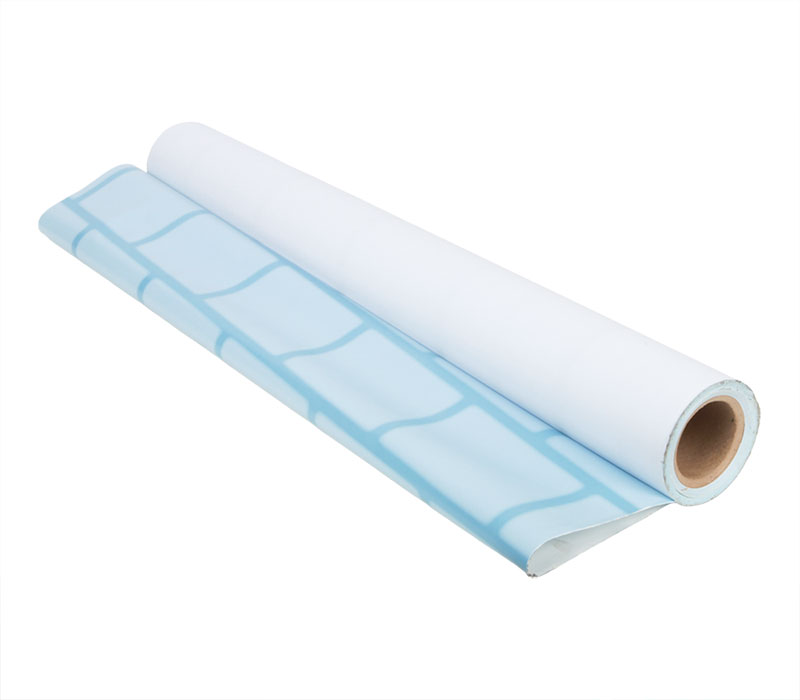
Laminated Bag Fabrics combine a textile base with TPU, TPO, PVC, or another compatible polymer film. The textile adds strength and dimensional support, while the outer layer provides color, texture, water resistance, cleanability, and processing performance.
MSD develops laminated fabrics for bags, luggage, outdoor equipment, protective cases, storage products, and related applications. Finished performance also depends on seams, handles, zippers, webbing, reinforcement, hardware, and product design.
Material Definition, Structure and Main Types
This section introduces the construction, functions, and principal polymer systems used in laminated bag fabrics.
What Are Laminated Bag Fabrics?
Laminated bag fabric is a multilayer material made by bonding a woven, knitted, or nonwoven textile to a polymer film. A typical construction may include:
- Polyester, nylon, or another textile substrate
- TPU, TPO, or PVC film
- A bonding or tie layer
- A smooth, matte, gloss, or textured finish
- An optional backing or functional layer
Related terms include composite bag fabric, luggage fabric, polymer-laminated textile, outdoor bag material, and protective case fabric. These names may refer to different textiles, film thicknesses, surfaces, and processing characteristics.
What Functions Do Laminated Bag Fabrics Provide?
Depending on the construction, the material may offer:
- Textile reinforcement
- Surface and water protection
- Decorative color or texture
- Flexible handling
- Cleanable surfaces
- Abrasion and fold resistance
- Sewing, welding, or bonding compatibility
- Transparent, translucent, or opaque effects
Properties should be confirmed for the selected construction rather than assumed from the polymer name alone.
How Are Laminated Bag Fabrics Structured?
The textile, polymer film, bonding layer, and surface finish work as one composite system.
| Structural Element |
Primary Function |
Evaluation Focus |
| Textile substrate |
Reinforcement |
Fiber, density, tensile and tear behavior |
| Polymer film |
Functional surface |
Chemistry, thickness and flexibility |
| Bonding interface |
Layer connection |
Peel adhesion and aging response |
| Surface finish |
Appearance and touch |
Color, gloss, texture and cleaning |
| Fabricated seam |
Panel connection |
Sewing, welding or bonding |
| Reinforcement layer |
Local load distribution |
Position and attachment method |
Strong base fabric cannot correct poor layer adhesion. Likewise, flat-material strength does not represent the performance of handles, zipper ends, or hardware points.
Textile Substrate
Fiber type, yarn denier, textile density, construction, material direction, tear behavior, heat response, and dimensional stability all affect performance.
Warp and weft values may differ. Finished-product strength also depends on seams, reinforcement, handles, hardware, and load distribution.
Polymer Film
The polymer layer influences:
- Color and appearance
- Flexibility and touch
- Water resistance
- Surface friction
- Cleaning and abrasion response
- Welding or bonding behavior
- Low-temperature flexibility
- Transparency or opacity
Film chemistry and thickness must be considered together with the textile, adhesive, and intended application.
Bonding Interface
Bond integrity depends on surface preparation, material compatibility, adhesive chemistry, temperature, pressure, curing, and conditioning.
Applications involving heat, moisture, or repeated folding may require peel testing after exposure rather than only testing the original material.
Surface Finish
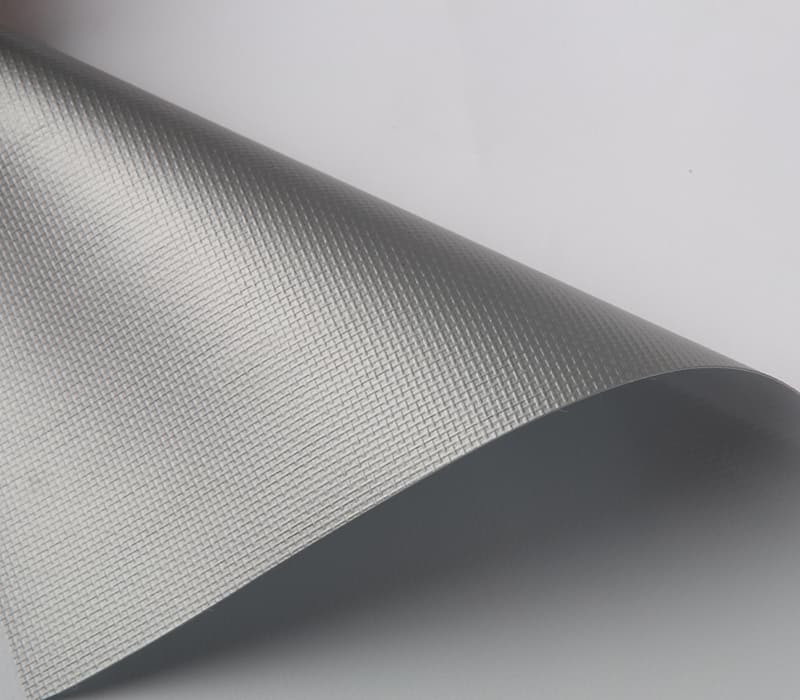
Available finishes may include smooth, matte, gloss-adjusted, textured, transparent, translucent, opaque, colored, or printed surfaces.
The selected finish can change touch, friction, cleaning, printing, welding, and adhesive performance.
Main Types of Laminated Bag Fabrics
MSD focuses on TPU, TPO, and PVC laminated textile systems.
TPU Laminated Bag Fabrics
TPU laminated fabrics combine textile reinforcement with a thermoplastic polyurethane film. Evaluation typically covers flexibility, abrasion, hydrolysis, repeated folding, low-temperature response, adhesion, welding, and surface feel.
TPU chemistry varies, so testing should use the exact construction intended for the application.
TPO Laminated Bag Fabrics
TPO laminated fabrics use a thermoplastic polyolefin surface. Important factors include surface energy, film adhesion, flexibility, heat response, weathering, welding, and adhesive compatibility.
Some TPO surfaces require treatment before printing or bonding.
PVC Laminated Bag Fabrics
PVC laminated fabrics combine a flexible vinyl layer with textile reinforcement. They can provide varied colors, textures, surface effects, and fabrication options.
Performance depends on the PVC formulation, plasticizer system, film thickness, adhesion, temperature exposure, and processing method.
TPU vs. TPO vs. PVC Laminated Bag Fabrics
Each polymer family has different evaluation priorities.
| Material System |
General Focus |
Evaluation Priorities |
| TPU |
Flexible polyurethane surface |
Hydrolysis, abrasion, folding and welding |
| TPO |
Polyolefin surface |
Surface energy, adhesion and heat response |
| PVC |
Flexible vinyl surface |
Formulation, texture and temperature response |
Polymer type is only part of the selection process. Textile design, surface finish, joining method, and service conditions are equally important.
Textile Selection, Manufacturing and Technical Performance
The textile and polymer layers should be evaluated as a complete material rather than as separate components.
Textile Substrates for Laminated Bag Fabrics
Substrate construction affects reinforcement, flexibility, dimensional stability, and fabrication.
Polyester Textile
Polyester offers dimensional support and compatibility with many lamination systems. Key considerations include yarn denier, density, tensile and tear behavior, heat response, and surface uniformity.
Nylon Textile
Nylon may be selected for its textile feel, flexibility, or application-specific mechanical behavior. Moisture absorption, heat sensitivity, abrasion, dimensional change, and adhesion should be reviewed.
Woven, Knitted and Nonwoven Structures
Different textile structures produce different handling and reinforcement characteristics.
| Textile Structure |
General Behavior |
Evaluation Focus |
| Woven |
Directional reinforcement |
Density, fraying and seam response |
| Knitted |
Flexible construction |
Stretch, recovery and stability |
| Nonwoven |
Sheet-like support |
Density, tear behavior and uniformity |
Available substrates depend on the selected MSD material construction.
How Are Laminated Bag Fabrics Manufactured?
Production normally includes textile preparation, polymer-film preparation, surface treatment, lamination, stabilization, and roll inspection.
Textile Preparation
The textile is checked for width, density, cleanliness, moisture, tension, flatness, edges, and visible defects. Contamination or unstable tension can affect adhesion and appearance.
Polymer Film Preparation
Film controls include chemistry, thickness, width, color, gloss, texture, surface energy, and dimensional consistency. Greater film thickness does not automatically provide greater durability.
Surface Treatment
Treatment may be used to improve lamination, printing, coating, or bonding. Cleanliness, surface energy, treatment uniformity, and processing time require control.
Lamination
Film and textile are joined under controlled temperature, pressure, speed, tension, alignment, cooling, and curing conditions. TPU, TPO, and PVC constructions require different process settings.
Stabilization
Cooling or conditioning helps control dimensions, adhesion, flexibility, flatness, curling, and roll quality.
Roll Inspection
Inspection may cover width, thickness, area weight, color, texture, alignment, adhesion, wrinkles, curling, edges, contamination, and roll geometry.
Technical Properties of Laminated Bag Fabrics
Test reports should identify the material grade, specimen direction, conditioning procedure, and method used.
Tensile Strength
Tensile strength describes material behavior under pulling force. Results depend on the textile, polymer layer, specimen dimensions, direction, speed, and conditioning.
Composite tensile data should not be treated as the load capacity of a finished bag or handle.
Tear Resistance
Tear testing measures how damage spreads from an existing cut or hole. Corners, stitch holes, handles, zipper ends, and hardware openings often require reinforcement.
Peel Adhesion
Peel adhesion evaluates the textile-to-film bond. Test direction, width, angle, speed, conditioning, and failure mode should be stated.
Testing after heat, humidity, water, or repeated folding may also be relevant.
Abrasion Response
Abrasion affects appearance and, with continued wear, may expose the textile. Testing should identify the abrasive medium, applied load, cycle count, tested surface, and endpoint.
Flex and Fold Response
Repeated bending may cause creases, whitening, cracks, deformation, print damage, or delamination. Test conditions should reflect the expected fold direction, radius, temperature, and cycle count.
Puncture Response
Puncture resistance depends on textile structure, film thickness, polymer flexibility, object shape, support conditions, temperature, and loading speed.
Dimensional Stability
Dimensional change can affect cutting, panel alignment, sewing, welding, zippers, hardware, and finished-product symmetry. Heat, humidity, tension, and fabrication should be considered.
Water and Moisture Response
Moisture may influence dimensions, adhesion, appearance, drying, odor, and some TPU systems.
A water-resistant surface does not make the complete product waterproof. Seams, zippers, edges, and hardware remain possible entry points.
Temperature Response
High or low temperatures may change flexibility, hardness, adhesion, welding response, dimensions, blocking, and product shape. Limits should be confirmed for the complete construction.
Surface Design, Fabrication and Applications
Surface appearance and fabrication behavior should be developed together with the final product design.
Surface and Design Considerations
Color, gloss, texture, transparency, touch, and cleaning response influence both appearance and practical use.
Color
Color assessment may cover roll consistency, lot variation, heat or light exposure, textile background, and appearance under intended lighting.
Gloss
Gloss changes reflections, fingerprint visibility, abrasion appearance, and overall product style. The appropriate level depends on use and cleaning needs.
Texture
Texture influences touch, friction, wear appearance, cleaning, printing, welding, and bonding. Strong textures may reduce effective contact area during joining.
Transparency and Textile Visibility
Transparent or translucent films reveal the underlying textile. Film clarity, haze, adhesive appearance, air bubbles, surface marks, and layer uniformity should be reviewed.
Converting and Fabrication Methods
Cutting, sewing, welding, bonding, edge binding, and hardware installation should be tested with the actual material construction.
Cutting
Cutting plans should consider direction, pattern layout, fraying, dimensional response, reinforcement, surface protection, and seam allowance.
Sewing
Needle geometry, thread, stitch density, edge distance, speed, layer count, and reinforcement affect seam performance. Trial seams can reveal slippage, tearing, or surface damage.
Thermal Welding
Compatible thermoplastic laminates may support thermal joining. Temperature, pressure, speed, dwell time, seam width, cooling, and surface preparation require validation for each material.
Adhesive Bonding
Bonding depends on polymer chemistry, surface energy, treatment, adhesive selection, application quantity, pressure, curing, moisture, heat, and load direction.
Edge Binding
Binding protects cut edges and contributes to appearance. Material, fold shape, stitch position, thickness, abrasion, and flexibility should be evaluated.
Zippers, Handles and Hardware
These areas carry concentrated, repeated loads. Reinforcement design, hole size, stitching, edge distance, abrasion, and pull-out behavior require prototype testing.
Applications of Laminated Bag Fabrics
Laminated fabrics can support carrying, storage, protective, travel, and outdoor applications.
Travel Bags and Luggage
Possible uses include travel bags, duffel bags, luggage panels, pockets, dividers, base panels, and decorative sections. Selection should reflect abrasion, folding, hardware, cleaning, and transportation.
Backpacks and Outdoor Packs
Important considerations include strap attachment, repeated folding, rain exposure, abrasion, weight, flexibility, and reinforcement at the base and back panel.
Equipment and Protective Cases
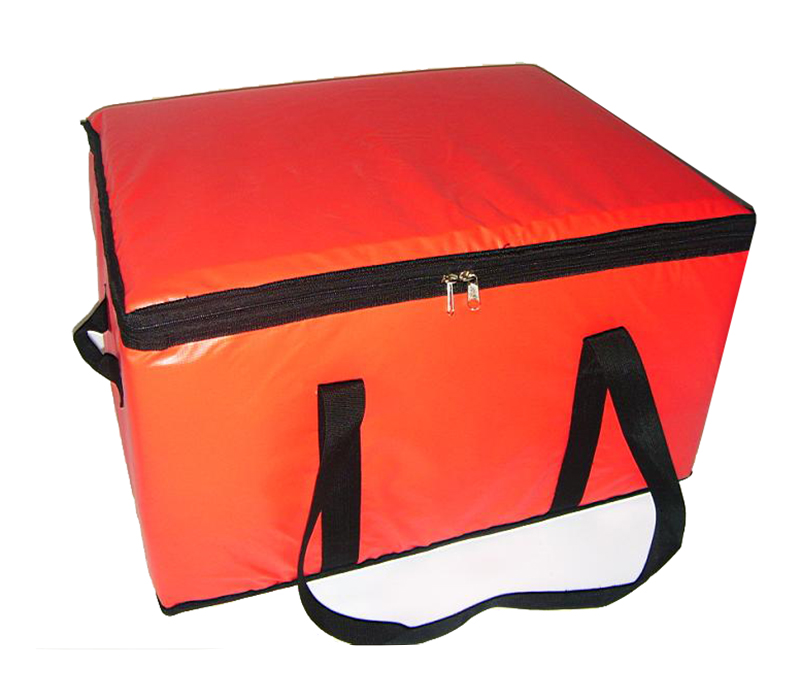
Protective cases may require surface protection, puncture resistance, shape control, reinforced hardware, cleaning, and repeated opening performance.
Flexible Storage Products
Applications include storage bags, organizers, tool bags, pouches, flexible containers, sleeves, and accessory cases.
Outdoor Accessories
Laminated fabrics may be used for covers, gear panels, pouches, equipment components, and transport systems after application-specific testing.
How to Select Laminated Bag Fabrics
Selection should start with the finished product, processing method, and expected service environment.
1. Define the Product Application Identify whether the material is intended for luggage, backpacks, protective cases, outdoor equipment, storage products, tool bags, or covers.
2. Select the Polymer System Compare TPU, TPO, and PVC for flexibility, surface design, abrasion, water exposure, temperature, joining, cleaning, and documentation requirements.
3. Select the Textile Substrate Review fiber type, yarn denier, density, textile construction, tensile and tear behavior, dimensional stability, and lamination compatibility.
4. Define Film Thickness and Area Weight Balance product weight, protection, flexibility, sewing, welding, handling, shape, and hardware installation. Thickness or area weight alone does not determine durability.
5. Confirm Surface Requirements Specify color, texture, gloss, transparency, touch, friction, cleanability, and decorative appearance.
6. Define the Fabrication Process Confirm cutting, sewing, welding, bonding, folding, binding, printing, zipper installation, reinforcement, and hardware attachment requirements.
7. Review the Service Environment Consider indoor or outdoor use, temperature, humidity, water, sunlight, abrasion, cleaning, chemicals, folding, and storage.
8. Define Relevant Testing Testing may include tensile, tear, peel, abrasion, flexing, puncture, dimensional stability, water exposure, temperature response, seams, welds, and hardware pull-out.
9. Produce a Representative Prototype The prototype should include the intended seams, thread, binding, zippers, handles, webbing, hardware, reinforcement, printing, welding, or bonding.
Quality Control, MSD Capabilities and FAQs
Clear documentation should separate material properties from seam, attachment, component, and finished-product performance.
Quality Control for Laminated Bag Fabrics
Inspection may include:
- Width, thickness, and area weight
- Textile and film specifications
- Color, gloss, and texture
- Layer alignment and adhesion
- Tensile, tear, abrasion, and flex response
- Dimensional and temperature stability
- Sewing and welding compatibility
- Edge condition and roll geometry
Reports should identify whether testing applies to the textile, film, laminate, seam, attachment, or finished component.
Storage and Handling
Store rolls in a clean, dry area away from direct heat, sunlight, moisture, oil, dust, and sharp objects. Avoid excessive stacking pressure, protect decorative surfaces, retain roll identification, and condition materials before processing when required.
Why Choose MSD Laminated Bag Fabrics?
MSD develops TPU, TPO, and PVC laminated fabrics with attention to textile selection, polymer-film integration, adhesion, surface consistency, dimensions, and fabrication performance.
Relevant capabilities include:
- Textile-substrate evaluation
- TPU, TPO, and PVC film integration
- Lamination-process control
- Thickness, width, and area-weight management
- Peel-adhesion evaluation
- Color, gloss, and texture inspection
- Dimensional-stability assessment
- Sewing and welding trials
- Roll and edge inspection
- Application-focused material development
- Technical values should be confirmed for the selected construction and stated test method.
Frequently Asked Questions About Laminated Bag Fabrics
The following answers cover common material, processing, and storage topics.
What are Laminated Bag Fabrics?
They are composite textiles made by bonding a textile substrate to a polymer film or functional surface.
What materials are used in MSD Laminated Bag Fabrics?
MSD develops TPU, TPO, and PVC laminated constructions using application-specific textiles, films, finishes, and bonding systems.
What is TPU laminated bag fabric?
It combines textile reinforcement with a thermoplastic polyurethane film. Performance depends on TPU chemistry, film thickness, adhesion, and processing.
What is TPO laminated bag fabric?
It combines a textile with a thermoplastic polyolefin surface. Surface energy, adhesion, temperature response, and joining conditions are important.
What is PVC laminated bag fabric?
It combines flexible PVC with textile reinforcement, offering varied colors, textures, cleaning characteristics, and fabrication options.
What is the difference between laminated and coated bag fabric?
Laminated fabric uses a preformed polymer film. Coated fabric applies a polymer formulation directly to the textile.
Are laminated bag fabrics waterproof?
Some constructions resist water through the material surface. Complete-product performance also depends on seams, zippers, bindings, edges, and hardware.
Can laminated bag fabrics be sewn?
Selected constructions can be sewn using suitable needles, thread, stitch patterns, seam geometry, and reinforcement.
Can laminated bag fabrics be welded?
Compatible thermoplastic materials may be welded after material-specific process settings are established.
What causes delamination in bag fabrics?
Possible causes include contamination, incompatible layers, inadequate bonding, unsuitable processing, heat, moisture, chemicals, or repeated folding.
How is abrasion resistance evaluated?
Testing defines the abrasive medium, load, cycles, tested surface, conditioning, and endpoint.
Does a thicker polymer film provide greater durability?
Not necessarily. Textile construction, polymer chemistry, adhesion, seams, hardware, and product geometry also affect durability.
Can laminated fabrics be printed?
Applicable surfaces may support printing after surface, ink, curing, adhesion, abrasion, and folding trials.
How should laminated bag fabric be selected?
Consider the application, polymer, textile, film thickness, surface finish, fabrication method, environment, and testing requirements.
How should laminated bag fabrics be stored?
Keep rolls clean, dry, protected from heat and sunlight, and free from excessive pressure or sharp contact.
Laminated Bag Fabrics combine textile reinforcement with TPU, TPO, or PVC surfaces. Their performance is determined by the complete system: textile, film, bonding interface, finish, fabrication method, reinforcement, and finished-product design.
MSD develops these materials for bags, luggage, outdoor equipment, protective cases, storage products, and related textile applications.

 English