
 English





We firmly believe that true manufacturing value lies not only in superior product performance but also in our responsibility to the environment, our commitment to society, and our long-term vision for...

Flexible Composite Materials





Flexible Composite Materials: PVC, TPU and TPO Structures, Properties and Applications
Flexible Composite Materials bring textiles and polymers together in a layered, flexible structure. A typical construction may include textile reinforcement, polymer film, coating, adhesive interface, and a functional outer surface. By adjusting these layers, the material can be developed for printing, water resistance, abrasion exposure, dimensional control, surface protection, and compatible fabrication.
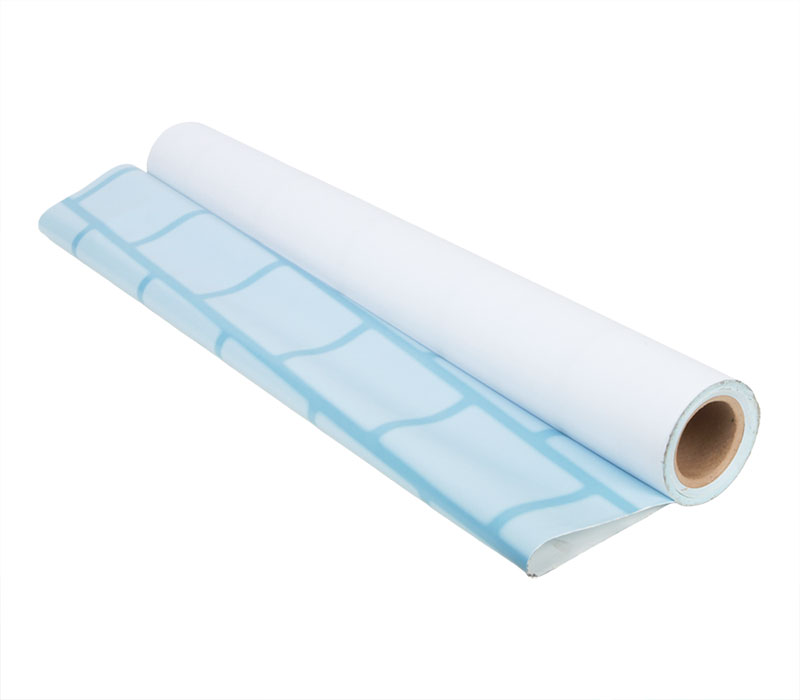
MSD develops flexible composite materials based on PVC, TPU, and TPO systems. Applications include advertising displays, bags, luggage, outdoor equipment, protective covers, and other technical textile products. The current range covers PVC Flex Banner and TPU, TPO, and PVC Laminated Bag Fabrics.
Performance comes from the complete construction rather than one layer alone. Textile design, polymer chemistry, coating or film thickness, interlayer adhesion, surface finish, converting method, and service conditions must be considered together.
What Are Flexible Composite Materials?
Flexible Composite Materials are engineered multilayer materials created by combining textiles, films, coatings, membranes, or other compatible functional layers. Each component has a specific purpose. The textile may carry mechanical loads, while the polymer surface provides protection, appearance, printability, or joining compatibility.
A typical flexible composite may contain:
- Woven, knitted, or nonwoven textile reinforcement
- PVC, TPU, or TPO film or coating
- Adhesive or tie layer where required
- Colored, printable, textured, or protective surface
- Application-specific finishing treatment
- Sewn, welded, bonded, folded, or reinforced sections in the final product
These materials are normally supplied as semi-finished technical components. Their behavior after fabrication also depends on seams, cut edges, reinforcement, printing, hardware, product dimensions, process settings, and environmental exposure.
What Functions Do Flexible Composite Materials Provide?
A flexible composite can combine several functions within one material structure. Depending on its design, it may support:
- Mechanical reinforcement
- Surface protection
- Water resistance
- Graphic printing
- Color and visual appearance
- Flexibility
- Cleaning
- Thermal welding
- Adhesive bonding
- Abrasion response
- Dimensional control
- Light transmission or blocking
- Decorative texture
- Repeated folding
Not every grade provides all these functions. Technical claims should always relate to the specified construction, sample condition, and test method.
For example, a printable banner and a laminated bag fabric may both contain polyester reinforcement and a polymer surface, but their requirements for flatness, folding, abrasion, seams, and appearance can be very different.
How Are Flexible Composite Materials Structured?
The layers of a flexible composite work as a connected system. Weak adhesion, an unsuitable seam, or an incompatible surface treatment can limit performance even when the textile itself is strong.
| Structural Element | Primary Function | Evaluation Focus |
| Textile substrate | Provides reinforcement and dimensional support | Yarn, density, weave, tensile response, and tear behavior |
| Polymer film or coating | Forms the functional outer layer | Chemistry, thickness, flexibility, and continuity |
| Bonding interface | Connects the polymer and supporting substrate | Peel adhesion, moisture resistance, heat response, and flex behavior |
| Functional surface | Supports printing, texture, optics, or protection | Surface energy, gloss, appearance, and durability |
| Fabricated seam | Connects panels or components | Sewing, welding, bonding, and seam strength |
| Reinforcement | Distributes stress around local load points | Position, dimensions, construction, and attachment method |
A strong textile cannot prevent delamination if the interface is poorly matched. Likewise, an uninterrupted polymer surface cannot correct a weak edge, unsuitable seam, or poorly designed hardware attachment.
Textile Substrate
The textile substrate provides the reinforcing framework of the composite. It may be woven, knitted, or produced through another application-specific textile process.
Important variables include:
- Fiber type
- Yarn specification
- Yarn count
- Fabric density
- Weave or knit structure
- Warp and weft behavior
- Surface consistency
- Tensile response
- Tear propagation
- Dimensional stability
- Thermal response
- Coating or lamination compatibility
Mechanical properties often differ by direction. Test reports should therefore identify whether the result applies to the warp, weft, machine, or cross direction. This information also helps determine panel orientation during printing, cutting, and fabrication.
Textile strength is not a complete rating for a finished banner, bag, cover, or technical component. Seams, edges, folds, hardware, reinforcement, shape, installation, and load distribution remain important.
Polymer Film or Coating
The polymer layer gives the composite its application-specific surface. Depending on the formulation and construction, it may provide:
- Surface protection
- Water resistance
- Color
- Printability
- Flexibility
- Weldability
- Cleanability
- Abrasion response
- Decorative or functional texture
- Light transmission or opacity
- Resistance to selected chemical contact
- Reduced contamination of the textile
Polymer behavior depends on chemistry, additives, thickness, processing history, and exposure conditions. The terms PVC, TPU, and TPO describe broad polymer families; they do not define one fixed performance level.
A thicker surface is not automatically more suitable. Increased thickness may affect flexibility, weight, welding settings, folding, surface feel, and the balance of the composite.
Bonding and Tie Layers
Some combinations of textile and polymer require a tie layer, adhesive, primer, or other interface treatment. Its role is to maintain stable contact between materials with different surface characteristics.
Bond quality may be influenced by:
- Chemical compatibility
- Textile preparation
- Surface energy
- Surface cleanliness
- Adhesive application
- Processing temperature
- Lamination pressure
- Production speed
- Cooling or curing
- Water exposure
- Heat aging
- Repeated folding
Initial peel strength is useful, but it does not describe every service condition. Materials used in humid, hot, outdoor, or frequently folded applications may also need adhesion testing after relevant conditioning.
The failure location should be recorded. Separation at the textile interface, cohesive failure within an adhesive, and splitting inside a polymer layer can indicate different technical causes.
Functional Surfaces
A functional surface may be designed for visual, tactile, optical, protective, or processing purposes.
Possible surface types include:
- Printable
- Smooth
- Matte
- Gloss-adjusted
- Textured
- Colored
- Transparent
- Translucent
- Opaque
- Light-blocking
- Application-specific protective finishes
Surface design can influence ink adhesion, image quality, cleaning, friction, welding, folding, blocking, and appearance after storage.
A printable surface should be tested with the intended ink, printer, curing method, and graphic coverage. A weldable surface should be assessed with the planned equipment and seam parameters.
Material Types, Manufacturing and Technical Performance
MSD’s Flexible Composite Materials category includes PVC Flex Banner and laminated fabrics based on TPU, TPO, or PVC. Each family has its own layer structure, processing requirements, and application priorities.
Main Types of Flexible Composite Materials
The principal material groups differ in surface function, converting route, and finished-product use.
PVC Flex Banner
PVC Flex Banner is a printable, textile-reinforced composite used for signs, advertising graphics, event displays, exhibition panels, and other visual communication applications.
A typical construction combines:
- Polyester textile reinforcement
- Flexible PVC surface layers
- Printable exterior
- Color-controlled finish
- Optional optical or light-management layer
Evaluation may include:
- Surface smoothness
- Color consistency
- Printing compatibility
- Ink adhesion
- Image definition
- Dimensional stability
- Flatness
- Curling
- Edge response
- Welding or seaming behavior
- Light transmission where relevant
- Weathering response
Banner structures can be developed for different viewing and lighting conditions. Where available within the verified product range, options may include front-illuminated, back-illuminated, light-blocking, and mesh-type materials.
The printed banner should be considered as a system. Ink coverage, curing, hems, seams, eyelets, tension, wind exposure, and supporting frames can all affect its appearance and service behavior.
Laminated Bag Fabrics
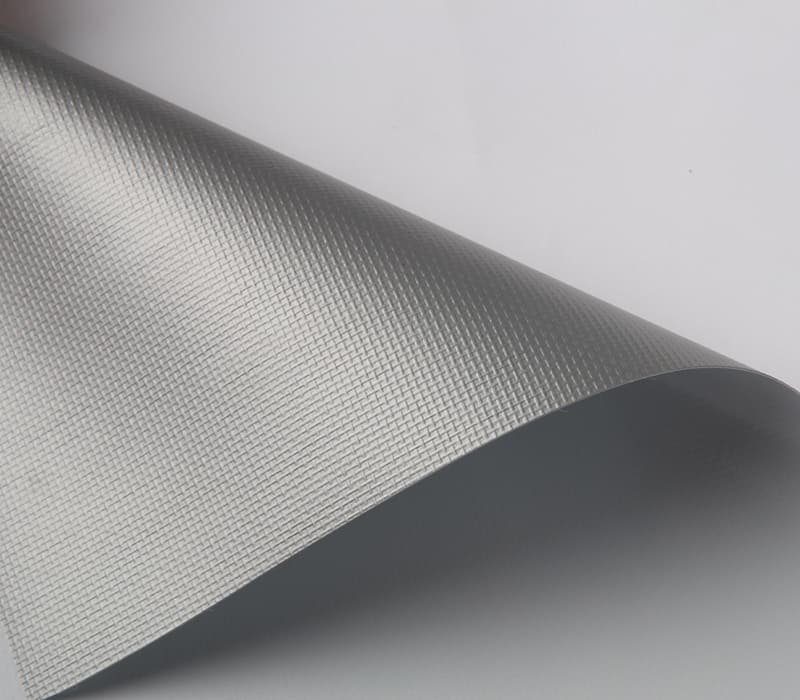
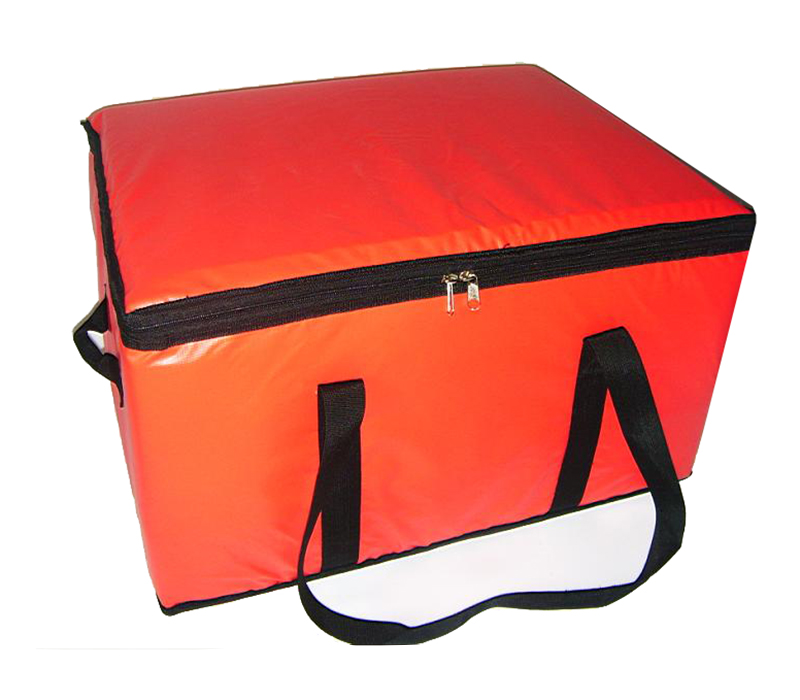
Laminated Bag Fabrics combine a textile substrate with TPU, TPO, PVC, or another compatible polymer surface. They can be used for bags, luggage, outdoor packs, equipment cases, protective covers, and flexible storage products.
Relevant properties include:
- Interlayer adhesion
- Flexibility
- Fold response
- Abrasion behavior
- Surface appearance
- Sewing response
- Welding compatibility
- Water exposure
- Cleaning response
- Hardware attachment
- Edge finishing
A finished bag contains more than the main panel material. Thread, seams, binding, zippers, handles, webbing, reinforcement patches, buckles, and hardware connections contribute to overall performance.
Areas around handles, straps, corners, and hardware often experience concentrated stress. These sections may require additional layers or modified seam geometry.
Application-Specific Composite Fabrics
Depending on the verified construction and supporting technical data, flexible composites may also be evaluated for:
- Printable technical textiles
- Protective covers
- Outdoor-equipment panels
- Flexible enclosures
- Reinforced membranes
- Surface-laminated textiles
- Flexible storage systems
- Technical textile components
Suitability should be established using the selected material grade, intended converting equipment, representative component geometry, and actual service conditions.
Coated Materials vs. Laminated Materials
Coating and lamination both combine polymers with supporting substrates, but they form the composite in different ways.
| Aspect | Coated Material | Laminated Material |
| Layer formation | Polymer is applied directly to the substrate | Preformed film or functional layer is joined to the substrate |
| Main controls | Formulation, coating quantity, curing, and continuity | Film consistency, interface preparation, heat, and pressure |
| Surface formation | Developed during coating and finishing | Influenced by the surface of the preformed film |
| Adhesion mechanism | Coating penetration and interface development | Film-to-textile or film-to-film bonding |
| Technical focus | Uniformity, thickness, and coating integrity | Interlayer adhesion, film stability, and composite balance |
Neither process guarantees a particular performance level. Final behavior depends on the textile, polymer chemistry, layer thickness, process control, conditioning, and fabrication method.
PVC Composite Materials
PVC composite materials combine flexible polyvinyl chloride layers with textile reinforcement or another supporting substrate.
PVC systems can be developed for:
- Printable surfaces
- Colored finishes
- Water-resistant exteriors
- Compatible thermal joining
- Flexible fabrication
- Textured surfaces
- Light-management structures
Technical evaluation may include:
- PVC formulation
- Plasticizer system
- Film or coating thickness
- Adhesion to the textile
- Print response
- Welding behavior
- Heat response
- Low-temperature flexibility
- Surface finish
- Migration requirements
- Relevant chemical documentation
PVC may be used in flex banners, laminated bag fabrics, protective covers, and other flexible technical products. Performance statements should relate to the identified grade rather than PVC as a general material family.
TPU Composite Materials
TPU composite materials combine a thermoplastic polyurethane film or coating with textile reinforcement.
Evaluation may focus on:
- TPU chemistry
- Film thickness
- Textile bonding
- Lamination conditions
- Flexibility
- Low-temperature behavior
- Hydrolysis response
- Welding range
- Abrasion response
- Repeated folding
- Surface feel
TPU is available in several chemical families. Different formulations may respond differently to water, humidity, heat, low temperatures, and prolonged exposure.
For this reason, hydrolysis, welding, weathering, or environmental statements should be supported by data for the specific TPU composite.
TPO Composite Materials
TPO composite materials use a thermoplastic polyolefin film, coating, or functional surface integrated with textile reinforcement.
Relevant variables include:
- Polyolefin formulation
- Film thickness
- Surface energy
- Textile adhesion
- Welding conditions
- Printing compatibility
- Adhesive compatibility
- Weathering response
- Flexibility
- Heat response
Some TPO surfaces have relatively low surface energy. Printing, coating, or adhesive bonding may require surface activation, primer, or another preparation process.
Treatment consistency and the time between treatment and fabrication can influence results. A surface that performs well immediately after treatment may behave differently after extended storage.
PVC vs. TPU vs. TPO Composite Materials
The table below summarizes general areas of assessment. It does not assign one polymer to every application.
| Material System | Processing Focus | Evaluation Priorities |
| PVC | Coating, lamination, printing, and thermal joining | Formulation, adhesion, surface finish, and thermal response |
| TPU | Film lamination or application-specific coating | Chemistry, hydrolysis, flexibility, and welding range |
| TPO | Film or coating integration with surface preparation | Surface energy, adhesion, joining, and weathering |
Polymer selection is only one step. Textile construction, film thickness, bonding system, appearance, converting method, environmental exposure, and finished-product geometry must also be considered.
How Are Flexible Composite Materials Manufactured?
Flexible composite materials are produced through a controlled sequence that may include substrate inspection, surface treatment, polymer coating or lamination, stabilization, finishing, and roll inspection. Each stage can influence appearance, adhesion, dimensional stability, and later fabrication performance.
Substrate preparation
Production begins with checking the textile or supporting layer. Key factors include width, fabric density, cleanliness, moisture, tension, flatness, edge condition, and dimensional consistency.
Dust, oil, excess moisture, damaged edges, or uneven tension can interfere with polymer bonding. These issues may also lead to coating variation, wrinkles, poor flatness, or irregular roll shape. Stable substrate feeding helps maintain consistent results across the material width and roll length.
Surface preparation
The substrate surface may be cleaned, treated, or primed to improve coating, lamination, printing, or adhesive bonding. Surface energy, treatment uniformity, chemical compatibility, and processing time should be carefully managed.
Any treatment used must suit the textile, polymer layer, ink system, adhesive, and expected working environment. An unsuitable treatment may improve initial bonding but create problems during printing, welding, storage, or long-term use.
Coating or lamination
During polymer integration, temperature, film thickness, coating or adhesive quantity, pressure, production speed, curing, and cooling require close control.
Uneven heat, pressure, or film tension may cause wrinkles, curling, visual differences, weak layer adhesion, or dimensional imbalance. Consistent processing is essential for uniform thickness and surface quality.
Stabilization and finishing
After integration, the composite may be cooled, conditioned, or cured. This stage helps control flatness, flexibility, adhesion, blocking, curling, and roll condition.
Finishing can also create matte, gloss, textured, printable, opaque, or other application-specific surfaces.
Roll inspection
Final inspection may cover width, thickness, area weight, color, surface appearance, adhesion, wrinkles, edges, contamination, curling, and roll geometry.
Winding tension is equally important. Excessive or uneven pressure can cause blocking, surface marks, telescoping, edge distortion, and unwanted curl during storage or later processing.
Technical Properties of Flexible Composite Materials
Technical data should clearly identify the material construction and sample condition. Base textiles, laminated fabrics, printed surfaces, seams, and finished components may produce different results.
Tensile strength
Tensile testing measures how a composite behaves under pulling force. Results depend on fabric structure, polymer layers, specimen size, test speed, conditioning, and material direction. Warp and weft values should be reported separately and should not be treated as the load capacity of a finished product.
Tear resistance
Tear resistance shows how damage spreads from an existing cut or opening. Corners, seam ends, handles, folds, and hardware holes are common stress points. Rounded shapes, reinforcement, or larger attachment areas can help control tearing.
Peel adhesion
Peel testing evaluates the bond between composite layers. Reports should include test direction, specimen width, peel angle, speed, temperature, conditioning, and failure mode. Exposure to moisture, heat, or repeated flexing may affect adhesion.
Abrasion response
Abrasion testing reflects wear caused by rubbing, sliding, and handling. The test method should identify the abrasive medium, load, cycles, tested side, and endpoint. Wear can damage graphics, alter appearance, or expose the textile layer.
Flex and fold response
Repeated folding may cause creasing, cracking, whitening, print damage, deformation, or delamination. Evaluation should reproduce the expected fold direction, temperature, thickness, and number of cycles.
Dimensional stability
Heat, tension, humidity, printing, curing, and storage may change material dimensions, affecting registration, cutting, sewing, welding, alignment, and installation.
Surface flatness and curling
Layer imbalance, winding tension, ink coverage, temperature, and storage can cause curling. Flatness should be checked before and after printing.
Water and moisture response
Testing may cover water resistance, drying, staining, dimensional change, and adhesion. Seams, zippers, edges, and hardware openings require separate assessment.
Weathering response
Outdoor exposure can affect color, gloss, flexibility, adhesion, dimensions, and print quality. Accelerated testing supports material comparison but cannot predict an exact outdoor lifespan.
Printing, Fabrication and Applications
Flexible composites usually pass through several fabrication stages before becoming finished parts. Printing, cutting, joining, folding, and reinforcement should be evaluated with the actual material construction.
Printing and Graphic Performance
Printing performance depends on the surface, ink system, equipment, curing process, and working environment.
Print compatibility
Surface chemistry, smoothness, ink type, printer settings, humidity, and storage can affect print results. Trials should use the intended equipment, resolution, speed, curing method, and graphic coverage.
Image quality
Check color, definition, ink coverage, banding, drying, and consistency under expected lighting. Large solid areas should be tested because small graphics may not reveal uneven coverage or curing issues.
Front-illuminated, back-illuminated and light-blocking structures
Front-illuminated materials reflect light from the printed face. Back-illuminated structures require balanced light transmission, while light-blocking composites reduce reverse-side show-through. Optical data should state the test conditions and material orientation.
Printed-material durability
Printed samples should be checked for ink adhesion, abrasion, folding, cleaning, moisture, weathering, blocking, and welding compatibility. Unprinted material data may not represent finished graphics.
Converting and Fabrication Methods
Processing methods must suit the polymer layer, textile reinforcement, composite structure, and component design.
Cutting
Consider fabric direction, usable width, pattern layout, registration, seam allowance, edge quality, and reinforcement areas. Cutting should also support the next joining stage.
Sewing
Needle size, thread, stitch density, sewing speed, layer count, and reinforcement influence seam quality. Trial seams can reveal slippage, tearing, surface damage, or poor flex performance.
Thermal welding
Temperature, pressure, speed, dwell time, seam width, cooling, and surface preparation require validation. PVC, TPU, and TPO composites may need different welding settings.
Adhesive bonding
Bond selection should reflect surface energy, preparation, curing time, pressure, temperature, humidity, and load direction. Testing after moisture or heat exposure may be necessary.
Edge finishing
Folding, binding, hemming, taping, welding, and reinforcement protect exposed edges. Hardware openings and attachment areas should be tested as complete components because they often carry concentrated loads.
Applications of Flexible Composite Materials
Flexible composites serve a wide range of functions, from printed visual media and carrying products to protective systems and technical textile components. Material construction should be matched to the fabrication process, product design, and actual service environment.
| Application Area | Typical Uses | Material and Performance Considerations |
| Advertising displays | Printed signs, advertising graphics, display panels, event graphics, exhibition displays, and visual communication structures | PVC Flex Banner should be evaluated for printing compatibility, image definition, surface appearance, flatness, light management, seam or hem construction, and exterior exposure. Frames, eyelets, attachments, installation tension, and wind loads require separate assessment. |
| Bags and luggage | Backpacks, travel bags, equipment bags, protective cases, storage bags, outdoor packs, and accessory pouches | Laminated fabrics may be assessed for repeated folding, abrasion, sewing response, edge finishing, cleaning, and water exposure. Handles, strap connections, zippers, corners, base panels, and hardware openings often require additional reinforcement. |
| Outdoor equipment | Protective covers, outdoor storage systems, equipment panels, accessory components, flexible enclosures, and application-specific textile parts | Selection should account for sunlight, rain, humidity, high and low temperatures, abrasion, repeated folding, installation conditions, and storage. Adhesion, flexibility, surface condition, and dimensional stability may change after prolonged exposure. |
| Technical applications | Flexible partitions, protective panels, printable membranes, equipment covers, reinforced soft structures, and technical textile components | The textile substrate, polymer layer, surface finish, joining method, and reinforcement design should be evaluated together. Representative trials should reproduce actual fabrication steps, loading conditions, and environmental exposure. |
The final material decision should be based on the complete product system rather than the composite fabric alone. Seams, hardware, edges, reinforcement, installation, and product geometry can be just as important as the properties of the flat material.
How to Select Flexible Composite Materials
Material selection should begin with the finished application and work back toward the textile, polymer, surface, and converting process.
1. Define the application
Identify whether the composite will be used for advertising, bags, luggage, outdoor equipment, protective covers, storage products, or another technical application.
2. Define the composite structure
Determine whether the application requires:
- Coated fabric
- Laminated fabric
- Single-sided composite
- Double-sided composite
- Printable surface
- Textured surface
- Transparent, translucent, or opaque layer
- Light-blocking or light-transmitting construction
3. Select the polymer system
Evaluate PVC, TPU, or TPO according to:
- Surface requirements
- Flexibility
- Printing method
- Welding process
- Adhesive bonding
- Environmental exposure
- Water contact
- Relevant technical documentation
4. Select the textile substrate
Review:
- Yarn specification
- Fabric density
- Tensile response
- Tear behavior
- Dimensional stability
- Surface uniformity
- Converting compatibility
5. Define thickness and area weight
Thickness and area weight may influence:
- Handling
- Folding
- Printing
- Sewing
- Welding
- Surface protection
- Finished-product weight
A heavier composite is not automatically more suitable. Textile design, polymer chemistry, adhesion, and component geometry remain important.
6. Confirm surface requirements
Define:
- Color
- Gloss
- Texture
- Printability
- Opacity
- Light transmission
- Cleaning response
- Surface friction
- Decorative appearance
7. Confirm the converting process
Assess the material using the intended printing, cutting, sewing, welding, bonding, folding, reinforcement, and edge-finishing processes.
8. Review the service environment
Consider:
- Interior or exterior use
- Sunlight
- Rain
- Humidity
- Heat
- Low temperatures
- Repeated folding
- Abrasion
- Cleaning
- Chemical contact
- Storage
9. Define relevant testing
Depending on the application, testing may include:
- Tensile strength
- Tear resistance
- Peel adhesion
- Abrasion
- Flex response
- Dimensional stability
- Water exposure
- Weathering
- Print adhesion
- Seam performance
- Welding response
Test methods, sample construction, conditioning, and acceptance criteria should be defined clearly.
10. Produce a representative trial
The trial should include actual printing, seams, folds, edges, reinforcement, hardware, and intended process settings.
A flat specimen may not reveal problems associated with ink coverage, seam intersections, folded edges, handles, zippers, or attachment points.
Flexible Composite Materials combine textile reinforcement with PVC, TPU, or TPO surface technology. Their behavior depends on how the substrate, polymer layer, bonding interface, surface finish, fabrication process, and service environment work together.
MSD develops Flexible Composite Materials for advertising displays, bags, luggage, outdoor equipment, protective covers, flexible storage products, and related technical applications.
-

+86-(0)573-87985868
-

+86-(0)573-89237968
-

-

NO.11 Hongqi Road, warp knitting industrial park of Haining City, Zhejiang Province, China
Copyright © Zhejiang MSD Group Share Co., Ltd. All Rights Reserved.
High Strength Composite Materials Manufacturer