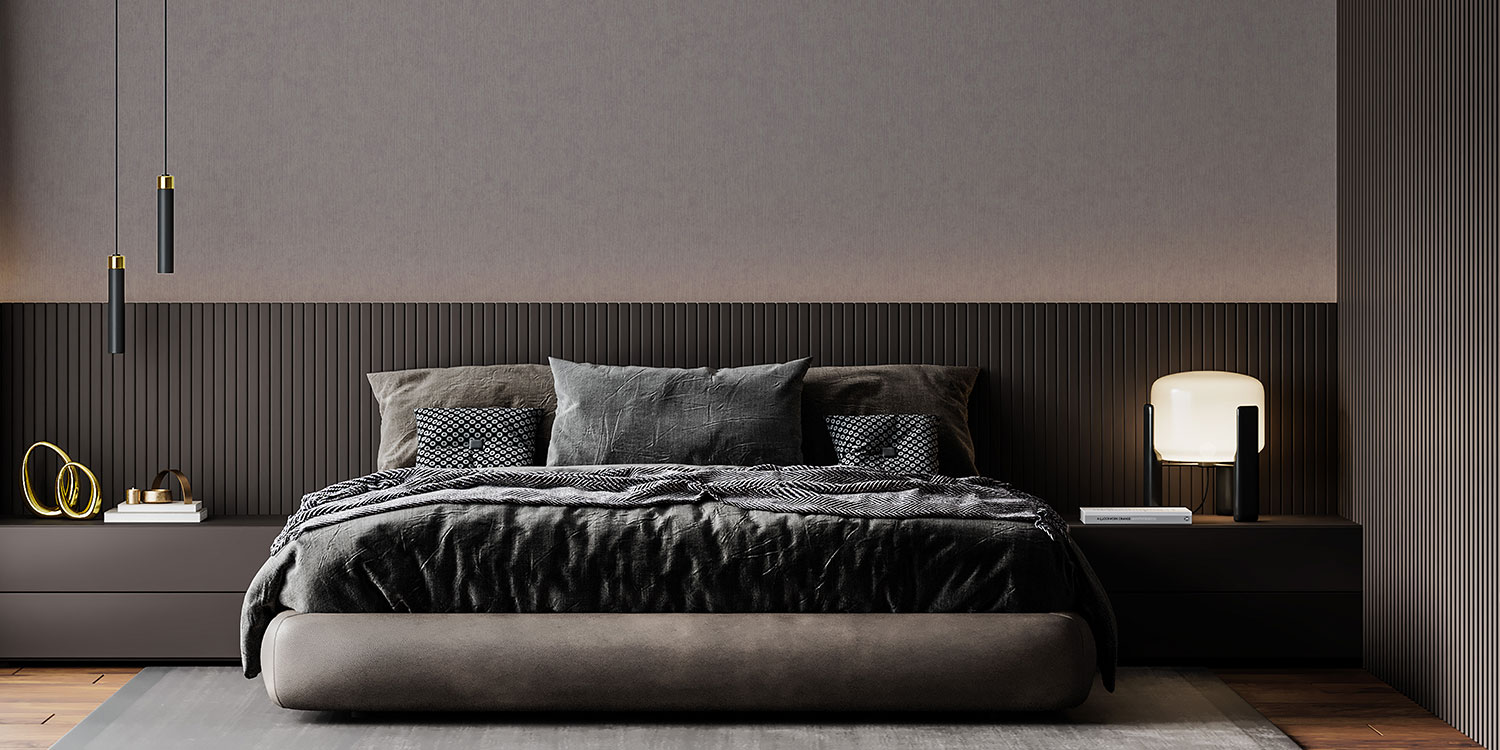
Artistic Wallcovering (PVC) for Decorative Interior Walls
Artistic Wallcovering (PVC) gives interior walls more character through color, texture, embossing, and custom imagery. Its layered construction combines a decorative vinyl face with a supportive backing, creating a practical wall finish for spaces that require both visual appeal and routine surface care.
MSD develops standard-width PVC wallcovering as well as wide-width artistic wallcovering within its home decoration material range. Product constructions include PVC laminated to non-woven or osnaburg backing. Depending on the series, finishes may be matte, satin, embossed, printed, fabric-inspired, or suitable for compatible digital printing technologies.
Choosing a wallcovering involves more than selecting an attractive pattern. The condition of the wall, backing construction, material width, texture depth, adhesive system, cleaning frequency, and project-specific technical requirements can all affect the finished surface.
This guide introduces the construction, available formats, decorative possibilities, printing compatibility, installation process, care methods, and key selection points for PVC artistic wallcovering.
What Is Artistic Wallcovering (PVC)?
Artistic Wallcovering (PVC) is a layered interior finishing material made from a decorative polyvinyl chloride surface and a supportive backing. The PVC face creates the visible color, texture, and printable area. The backing supports handling, dimensional consistency, and adhesion to a correctly prepared wall.
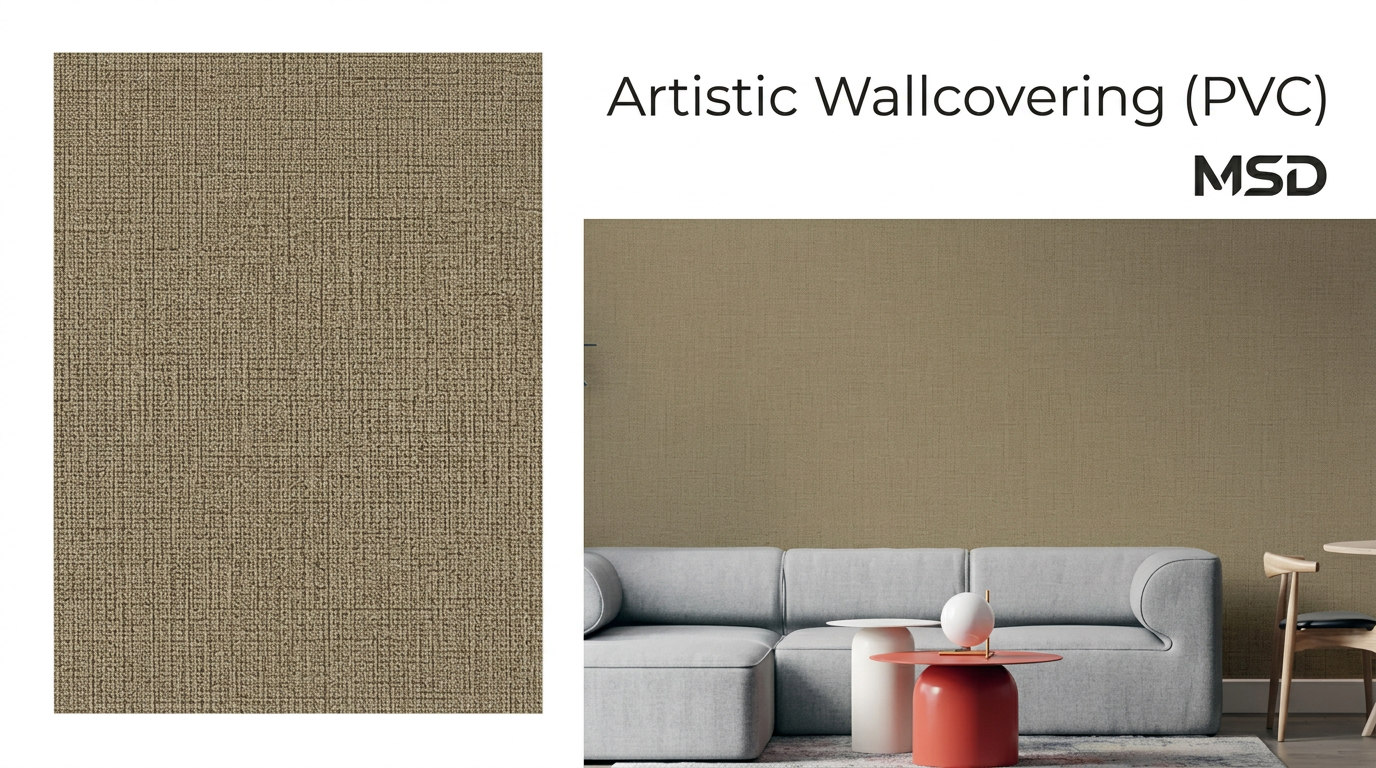
Unlike flat paint, wallcovering can give a surface both visual and tactile depth. Depending on the design, it can reproduce the appearance of woven fabric, stone, leather, mineral surfaces, geometric structures, abstract artwork, or custom graphics.
A typical wallcovering application includes:
- A decorative PVC face
- Non-woven or osnaburg backing
- Compatible wall adhesive
- A clean, dry, and stable substrate
- Planned seams and pattern alignment
- Carefully finished corners and edges
- Suitable cleaning and maintenance methods
These elements need to work as one system. Even a well-made decorative surface may perform poorly when applied over an uneven wall, unresolved moisture, loose paint, or an incompatible adhesive.
PVC artistic wallcovering is commonly used in hotels, offices, restaurants, retail interiors, cultural venues, public spaces, and residential rooms. The most suitable construction depends on the wall condition, expected contact level, cleaning routine, and overall interior environment.
Main Types of Artistic Wallcovering
The MSD range includes standard-width PVC wallcovering and wide-width PVC artistic seamless wallcovering. The two formats suit different wall dimensions, visual concepts, installation methods, and seam layouts.
PVC Wallcovering (Width 1.10–1.37 m)
Standard-width PVC wallcovering is designed for conventional wall applications, including repeated patterns, textured finishes, coordinated color schemes, and decorative feature surfaces.
Its practical width allows installers to plan vertical sections across walls of different sizes and shapes. The final number of seams depends on the wall dimensions, selected material width, installation direction, repeat pattern, doors, windows, and other architectural details.
Typical applications include:
- Hotel rooms and corridors
- Office walls
- Reception areas
- Restaurant interiors
- Retail environments
- Residential feature walls
- Meeting rooms
- Public interior spaces
Before installation, the layout should account for corners, door frames, windows, switches, service openings, and areas that may experience frequent contact.
PVC Artistic Seamless Wallcovering (Width 2.80–3.20 m)
PVC artistic seamless wallcovering is a wide-format decorative material developed to cover suitable wall heights with fewer noticeable vertical joins.
When the material width matches the wall height, it may be positioned horizontally across a broad surface. This method works particularly well for panoramic imagery, mural-style artwork, uninterrupted textures, and designs where visual continuity is important.
Wide-width artistic wallcovering can be used for:
- Panoramic scenes
- Large-scale custom graphics
- Continuous fabric-style textures
- Scenic murals
- Abstract artwork
- Brand-focused interior graphics
- Coordinated hotel interiors
- Large decorative feature walls
In this context, seamless means the material can reduce prominent vertical joins on appropriately sized walls. It does not mean every interior can be completed without connections. Wall length, corners, columns, material dimensions, access conditions, and architectural openings still influence the final arrangement.
Structure of PVC Artistic Wallcovering
PVC artistic wallcovering is a composite product rather than a single-layer film. Its surface and backing perform different roles, while finishing treatments influence appearance, touch, print behavior, and maintenance.
PVC Decorative Layer
The PVC decorative layer forms the visible face of the wallcovering. It carries the selected color, printed design, embossed pattern, and surface finish.
Depending on the product series, the surface may provide:
- Smooth or embossed textures
- Matte or satin finishes
- Fabric-inspired effects
- Leather-style grains
- Stone and mineral patterns
- Geometric designs
- Abstract graphics
- Compatibility with selected printing systems
- A surface suited to routine cleaning
PVC formulation and surface treatment can affect flexibility, ink interaction, resistance to regular contact, and cleaning response. Texture depth also influences how the wall looks under natural and artificial light.
Non-Woven Backing
Non-woven backing is manufactured without a conventional woven fabric structure. It supports the PVC face during handling and can help maintain dimensional consistency throughout installation.
Applicable non-woven-backed products may use a paste-the-wall installation method. With this approach, adhesive is spread directly onto the prepared wall before the wallcovering is positioned.
Installation performance can be affected by:
- Backing construction
- Substrate absorbency
- Adhesive type
- Adhesive coverage
- Room temperature
- Wall moisture
- Ventilation and drying conditions
The backing should always be used with a suitable adhesive and a wall that has been properly inspected and prepared.
Osnaburg Backing
Osnaburg is a woven textile backing used in selected contract vinyl wallcovering constructions. Its fabric structure reinforces the decorative PVC layer and supports handling in interiors where walls may experience regular contact.
Osnaburg-backed wallcovering may be considered for spaces where added support and dimensional control are useful.
Important factors include:
- Fabric structure
- Material weight
- Adhesive compatibility
- Substrate preparation
- Seam treatment
- Handling during installation
- Future removal method
Although the textile backing adds reinforcement, it cannot correct cracks, loose coatings, uneven repairs, or structural instability in the wall beneath it.
Surface Finishing
Finishing treatments affect gloss, texture, tactile character, print interaction, and cleaning behavior.
Deep embossing creates a stronger three-dimensional effect, while a fine-grain surface gives the wall a quieter appearance. Matte finishes soften reflections. Satin surfaces respond more visibly to directional lighting and may make the texture appear more pronounced.
Selected materials may include an additional surface treatment for a particular appearance or maintenance requirement. The properties of that treatment should be checked using the technical information for the exact construction.
Surface Designs and Decorative Effects
Color, texture, pattern scale, and lighting all shape the atmosphere of an interior. For that reason, wallcovering should be viewed in the room where it will be installed, or under lighting that closely represents the final space.
Textile-Inspired Textures
Linen, canvas, woven, and fabric-style finishes bring warmth and softness to walls without leaving exposed textile as the finished surface.
These designs are well suited to:
- Guest rooms
- Lounges
- Bedrooms
- Meeting spaces
- Reception areas
- Dining rooms
- Quiet public interiors
The realism of a textile effect depends on embossing depth, color variation, surface sheen, and light direction. Side lighting often makes woven details more visible than front-facing illumination.
Stone and Mineral Effects
Stone-, concrete-, and mineral-inspired wallcoverings create an architectural look without placing natural stone directly on the substrate.
These finishes may be used in contemporary offices, restaurants, reception spaces, retail interiors, and residential feature walls.
Pattern scale deserves careful attention. A large stone motif may work well across a broad uninterrupted surface but lose its visual balance when divided by narrow wall sections, windows, columns, or door frames.
Leather-Inspired Finishes
Leather-style wallcovering uses embossing, color layering, and surface sheen to create a warm, refined appearance. It can complement lounges, hotel interiors, private rooms, reception spaces, and decorative wall panels.
This material is a PVC interpretation created for interior walls. Its physical behavior should not be treated as equivalent to natural leather.
Geometric and Abstract Patterns
Geometric embossing and abstract graphics create movement and depth without using realistic imagery. They can be subtle enough for an entire room or bold enough for a single feature wall.
Pattern direction should be established before cutting begins. Some designs allow flexible placement, while others need careful matching between adjacent sections to maintain visual continuity.
Printed Murals
Wide-format PVC wallcovering can carry panoramic landscapes, botanical illustrations, cultural artwork, abstract compositions, and customized interior themes.
The completed image is affected by:
- Original file resolution
- Actual wall dimensions
- Printing scale
- Normal viewing distance
- Ink technology
- Surface texture
- Color profile
- Interior illumination
- Seam location
- Doors, windows, and other openings
Artwork should be created around the measured wall rather than adapted as an afterthought. Doors, windows, switches, columns, fixed furniture, signage, and major sightlines should be mapped before the image is finalized.
Printing Compatibility of PVC Wallcovering
Selected MSD wallcovering constructions may be suitable for UV, eco-solvent, and latex printing. Successful printing depends on the PVC surface, coating, ink chemistry, machine settings, feed control, and curing or drying process.
Two wallcoverings that look similar may react differently to ink, heat, or surface treatment. A print trial using the intended equipment and artwork is therefore an important part of project preparation.
UV Printing
UV technology cures ink on the material surface using ultraviolet light. When paired with compatible PVC wallcovering, it can produce fine detail, defined edges, and strong color.
Key evaluation points include:
- Ink adhesion
- Surface treatment
- UV curing energy
- Flexibility after printing
- Color reproduction
- Interaction with embossing
- Response to cleaning
Heavy ink coverage may alter the original touch, gloss level, or flexibility of the wallcovering. Highly textured surfaces may also create different visual results from smooth materials.
Eco-Solvent Printing
Eco-solvent technology may be used with selected decorative wallcoverings. Compatibility should be checked against the printing equipment, ink system, PVC face, and backing construction.
Relevant factors include:
- Ink and surface compatibility
- Drying time
- Ventilation
- Color density
- Texture depth
- Flexibility after printing
- Requirements for interior use
Printed material should receive sufficient drying and processing based on the guidance supplied with the chosen ink system.
Latex Printing
Compatible PVC wallcovering may also be printed with latex technology. Machine temperature, feed settings, material weight, surface texture, and backing construction should all be considered before full-scale production.
Excessive heat can affect dimensions or surface appearance. Incomplete curing can influence adhesion, color, handling, and subsequent cleaning performance.
Print Testing
A representative test can be used to assess:
- Ink adhesion
- Image sharpness
- Color accuracy
- Surface appearance
- Drying or curing
- Material flexibility
- Dimensional response
- Compatibility with cleaning methods
The sample should reproduce the intended artwork, ink coverage, machine settings, and finishing process. Testing a simple color strip may not reveal issues associated with heavy coverage, fine text, dark colors, or embossed areas.
Artistic Wallcovering Specifications
The following table summarizes information presented for selected MSD artistic wallcovering constructions.
Specification
| Displayed Information |
Why It Matters |
| Product construction Contract vinyl with non-woven or osnaburg backing |
Affects reinforcement, handling, adhesion, and installation |
| Standard width Approximately 1.10–1.37 m for applicable series |
Influences wall layout and seam positioning |
| Wide width Approximately 2.80–3.20 m for applicable series |
Can reduce vertical joins on suitably sized walls |
| Material weight Selected constructions around 340 or 450 g/m² |
Affects handling, adhesive choice, and substrate preparation |
| Pattern match Free match for selected designs |
Allows simpler positioning when no fixed repeat is present |
| Adhesive method Paste the wall for applicable products |
Defines how adhesive is applied during installation |
| Removal Strippable for selected constructions |
Depends on the backing, adhesive, primer, and wall condition |
| Maintenance Washable surface for applicable products |
Requires a suitable cleaning method |
| Fire classification EU B-s1,d0 or US Class A for selected products |
Must correspond with the exact construction and supporting report |
These details relate to selected products within the MSD range. Width, weight, backing type, installation method, and technical performance should be verified against the information for the relevant wallcovering construction.
Where Is Artistic Wallcovering Used?
Artistic PVC wallcovering is used in interiors where surface appearance, tactile detail, printability, and practical maintenance all matter. The chosen material should suit the room’s function, expected contact level, cleaning schedule, wall condition, and applicable technical criteria.
Hotels and Hospitality Interiors
Common hospitality applications include:
- Guest rooms
- Corridors
- Lobbies
- Reception walls
- Restaurants
- Lounges
- Function rooms
- Lift lobbies
Wide-width wallcovering can help maintain continuous imagery across feature walls. Reinforced contract vinyl constructions may be considered for locations exposed to regular contact from guests, luggage, furniture, or service equipment.
Seam positions, cleaning procedures, fire documentation, lighting, and access around fixtures should be reviewed during the material selection stage.
Offices
Office applications may include:
- Reception areas
- Meeting rooms
- Executive rooms
- Shared workspaces
- Corridors
- Presentation rooms
- Staff break areas
Wall color and texture should be coordinated with lighting, furniture, signage, and the broader interior plan. Wallcovering should not be presented as an acoustic treatment unless the selected construction has relevant supporting test data.
Retail and Showroom Spaces
Printable wallcovering can form decorative backdrops, brand graphics, product presentation zones, seasonal themes, and large visual displays.
Artwork planning should include shelves, signs, lamps, display fixtures, merchandise placement, and normal viewing distance. Important text or visual elements should not be hidden behind permanent fittings.
Restaurants and Cafés
PVC wallcovering can add color, texture, and atmosphere to dining areas, private rooms, entrance zones, corridors, and reception spaces.
Walls close to cooking appliances, open flames, concentrated heat, or persistent grease need separate assessment. The surface and cleaning method should suit the actual conditions of the installation area.
Residential Interiors
Residential applications may include:
- Living rooms
- Bedrooms
- Dining rooms
- Hallways
- Study rooms
- Entertainment rooms
- Feature walls
In kitchens, bathrooms, and other moisture-prone spaces, ventilation and substrate moisture need careful review. A PVC face may resist routine surface moisture, but it cannot repair dampness, leaks, or condensation problems inside the wall.
Cultural and Public Spaces
Artistic wallcovering may be used in museums, galleries, libraries, educational facilities, cinemas, visitor centres, and public service interiors.
Large graphics can support exhibitions, storytelling, cultural themes, and directional communication. Any required fire, emission, or material documentation should apply to the exact wallcovering construction being considered.
Healthcare and Wellness Interiors
Smooth and lightly textured surfaces can help create calm visual settings in clinics, consultation rooms, wellness facilities, and reception spaces.
Claims related to antibacterial activity, medical suitability, or hygiene performance require dedicated supporting evidence. General PVC characteristics do not establish these properties.
Wall Preparation Before Installation
Wall preparation has a major influence on adhesion, seam appearance, and long-term surface stability. Before installation begins, the substrate should be dry, clean, smooth, even, and structurally sound.
Inspect the wall for:
- Surface unevenness
- Excess moisture
- Dust and construction debris
- Oil or grease
- Loose or flaking paint
- Cracks
- Visible repair patches
- Existing coatings
- Uneven absorbency
- Mold or recurring dampness
Glossy surfaces and substrates with low absorbency may need additional preparation to help the adhesive form a reliable bond. Highly absorbent walls may also require suitable treatment so that the adhesive does not dry too quickly or unevenly.
Leaks, mold, condensation, and persistent moisture should be corrected at the source. Covering a damp substrate can trap moisture and may damage the adhesive, backing, existing coating, or wall structure.
The base color also deserves attention, particularly beneath pale or slightly translucent materials. A consistent wall color can reduce the risk of repair marks or contrasting patches showing through the finished surface.
Installation of Artistic Wallcovering
Installation varies with the backing type, wall condition, material width, weight, and adhesive system. The steps below describe a general paste-the-wall method for applicable wallcovering constructions.
1. Inspect the Wall
Check that the wall is dry, level, smooth, stable, and free from loose material. Fill cracks and repair uneven sections before applying primer or adhesive.
2. Plan the Layout
Establish the starting point, reference lines, seam positions, pattern direction, corners, and architectural openings. For murals, confirm the sequence and orientation of every image section before adhesive is applied.
3. Check the Material
Inspect the wallcovering for color consistency, texture, print placement, surface condition, and roll identification before cutting. Any visible concern should be assessed before the material is fixed to the wall.
4. Prepare the Adhesive
Choose an adhesive that is compatible with both the backing and substrate. Mix and use it in line with the relevant technical instructions.
5. Apply Adhesive to the Wall
For suitable paste-the-wall constructions, spread the adhesive evenly across a manageable section. Missed areas or excessive buildup can lead to uneven drying, bubbles, weak adhesion, or visible surface variation.
6. Position the Wallcovering
Place the wallcovering against the prepared reference line. Smooth the material carefully to release trapped air while avoiding excessive tension or stretching.
7. Finish Seams and Edges
Align adjacent sections according to the pattern and recommended seam method. Take particular care around internal and external corners, doors, windows, switches, sockets, and service openings.
8. Remove Adhesive Residue
Wipe away visible adhesive promptly using a clean tool and a method that is safe for the decorative face. Heavy rubbing may alter the finish or leave polished marks on matte and embossed surfaces.
9. Inspect the Finished Wall
Before the adhesive has fully cured, check the seams, pattern alignment, corners, edges, bubbles, openings, and overall appearance. Early inspection allows minor adjustments that may not be possible later.
Wide-width wallcovering needs adequate workspace and coordinated handling. Product-specific installation guidance should always take precedence over general methods.
How to Select Artistic Wallcovering
A suitable wallcovering should meet both the visual goals and the practical conditions of the room. Selection is more reliable when the surface, backing, wall, adhesive, printing method, and maintenance routine are evaluated together.
Select the Backing
Non-woven backing supports dimensional consistency and may suit paste-the-wall applications. Osnaburg backing adds woven textile reinforcement to selected contract vinyl constructions.
The choice should reflect:
- Wall condition
- Material weight
- Installation method
- Expected contact level
- Adhesive system
- Future removal requirements
Confirm the Width
Standard-width wallcovering suits traditional vertical installation and repeated designs. Wide-width material can reduce vertical seams when its dimensions are compatible with the wall height and planned installation direction.
Accurate wall measurements should include corners, recesses, columns, windows, doors, fixed furniture, and service openings.
Review Material Weight
Material weight affects handling, cutting, positioning, and adhesive selection, but it should not be treated as a complete measure of quality or performance.
The PVC layer, backing structure, embossing, surface treatment, adhesive, and substrate all contribute to the finished wall.
Choose the Surface Texture
Fine textures create a subtle appearance and can be simpler to maintain. Deep embossing introduces stronger tactile detail but may collect dust or cleaning residue if unsuitable methods are used.
Samples should be reviewed under the intended room lighting. Directional illumination can make embossed patterns appear significantly stronger.
Evaluate Printing Requirements
For custom graphics, confirm:
- Printing technology
- Ink compatibility
- Source artwork resolution
- Final image dimensions
- Color reference
- Surface texture
- Curing or drying conditions
- Typical viewing distance
A representative print trial helps reveal differences between the digital artwork and the printed wall surface.
Consider Cleaning Frequency
Hotel corridors, restaurants, reception areas, and public spaces may need more frequent cleaning than bedrooms, private offices, or low-contact feature walls.
Cleaning frequency, stain exposure, texture depth, and suitable cleaning products should form part of the material assessment.
Confirm Technical Documentation
When a project specifies fire performance, indoor emissions, or another measured characteristic, the supporting document should correspond with the selected construction, backing, material weight, and test method.
A result from one wallcovering version should not automatically be applied to a different backing, surface finish, or weight.
Why Choose MSD Artistic Wallcovering (PVC)?
MSD develops Artistic Wallcovering (PVC) as part of its home decoration material portfolio. The range includes standard-width PVC wallcovering and wide-width artistic wallcovering for textured, printed, and contract interior applications.
PVC surface development, backing lamination, embossing, finishing, print compatibility, and product inspection are connected within an integrated manufacturing system. This provides a consistent framework for evaluating visual design alongside material construction and application needs.
MSD capabilities include:
- PVC decorative surface development
- Non-woven-backed wallcovering construction
- Osnaburg-backed wallcovering construction
- Standard-width material production
- Wide-width wallcovering production
- Embossed texture development
- Matte and satin finishing
- Development of surfaces compatible with digital printing
- Color and appearance evaluation
- Weight and dimension control
- Roll-surface inspection
- Application-focused specification development
- Technical documentation for applicable products
MSD also considers how the wallcovering interacts with the substrate, adhesive, seam layout, printing technology, cleaning routine, and surrounding interior conditions.
When a project identifies a specific fire classification, printing property, environmental characteristic, or removal method, the relevant information should be checked against the exact material construction.
Frequently Asked Questions About Artistic Wallcovering
The answers below cover common questions about PVC artistic wallcovering, backing types, available widths, printing, installation, cleaning, and suitable interior applications.
What types of artistic wallcovering does MSD provide?
MSD provides standard-width PVC wallcovering and wide-width PVC artistic wallcovering. Selected products are constructed with non-woven or osnaburg backing.
What is seamless PVC wallcovering?
Seamless PVC wallcovering is a wide-format material designed to reduce noticeable vertical joins on suitable walls. The final seam layout depends on the wall dimensions, material width, installation direction, corners, and architectural features.
What widths are available?
The MSD range includes standard-width products of approximately 1.10–1.37 metres and wide-width products of approximately 2.80–3.20 metres. Current dimensions should be verified for the selected series.
What is the difference between non-woven and osnaburg backing?
Non-woven backing supports dimensional stability and may be suitable for paste-the-wall installation. Osnaburg is a woven textile backing that reinforces selected contract vinyl wallcoverings.
The appropriate backing depends on the substrate, wallcovering weight, adhesive system, installation method, and intended interior use.
Can PVC artistic wallcovering be digitally printed?
Selected compatible products can support UV, eco-solvent, or latex printing. Ink adhesion, color reproduction, curing, heat response, and surface interaction should be evaluated through a representative print trial.
Is PVC wallcovering washable?
Applicable PVC surfaces can be cleaned using compatible, non-abrasive methods. Cleaning performance varies with the finish, coating, embossing depth, stain type, and chosen cleaning solution.
How is artistic wallcovering installed?
Applicable constructions may use a paste-the-wall method with a compatible adhesive. The substrate should be clean, dry, smooth, stable, and correctly prepared before installation begins.
Can PVC wallcovering be removed?
Selected constructions are described as strippable. Actual removal behavior depends on the backing, adhesive, primer, substrate condition, installation method, and service period.
Where can artistic PVC wallcovering be used?
It can be used in hotels, offices, restaurants, retail interiors, cultural venues, public spaces, and residential rooms. Selection should take into account wall condition, contact level, cleaning frequency, interior environment, and technical requirements.
How should PVC wallcovering be cleaned?
Use a clean, soft cloth with a compatible mild cleaning solution. Avoid abrasive pads, sharp tools, concentrated pressure, and aggressive solvents that could mark the surface or change its finish.
Artistic Wallcovering (PVC) combines decorative flexibility with a supportive layered construction. The PVC face provides color, embossing, texture, and printability, while non-woven or osnaburg backing supports handling and installation.
Standard-width wallcovering works well for conventional layouts, coordinated textures, and repeated patterns. Wide-width artistic wallcovering can reduce prominent vertical joins and provide a suitable surface for panoramic imagery or large decorative graphics. Selected constructions may also work with UV, eco-solvent, or latex printing after compatibility has been verified.
A successful wall finish depends on the complete application. Wall condition, adhesive choice, backing construction, surface design, room environment, installation technique, and cleaning method all contribute to the final result. Reviewing these details together helps create an interior wall that is visually coherent, practical to maintain, and appropriate for its setting.
MSD — Standard-Width and Wide-Width PVC Artistic Wallcovering for Decorative Interior Applications.

 English