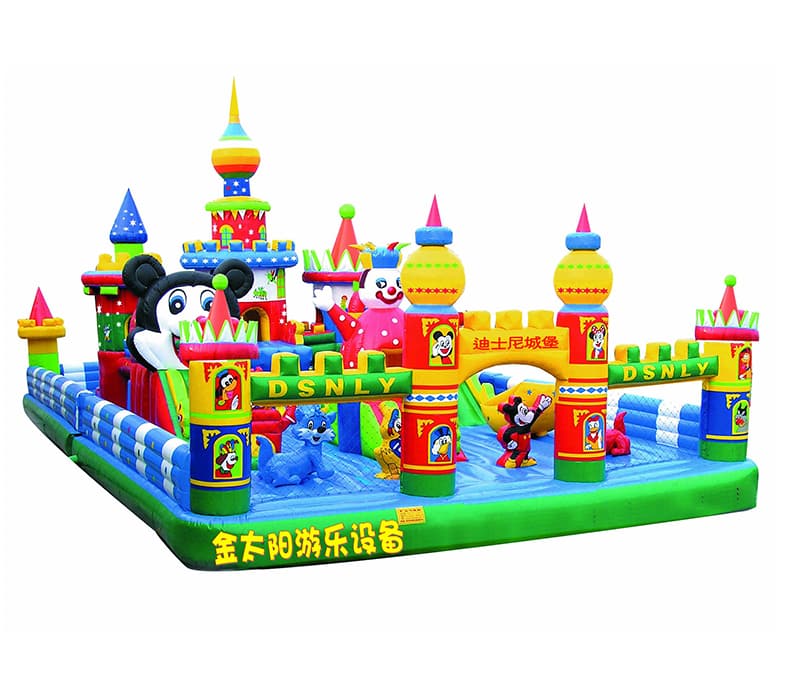
PVC Coated Inflatable Fabric: Construction, Performance and Application Guide
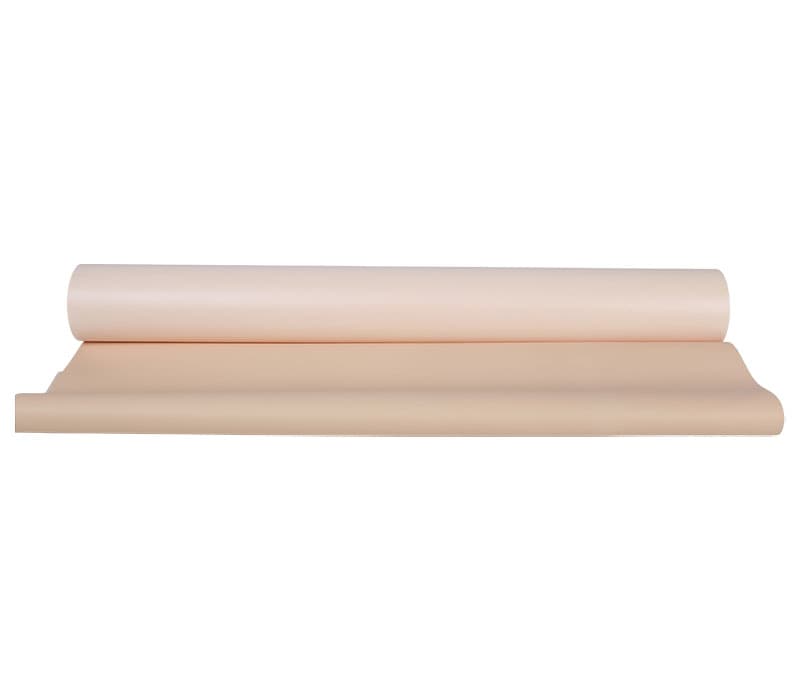
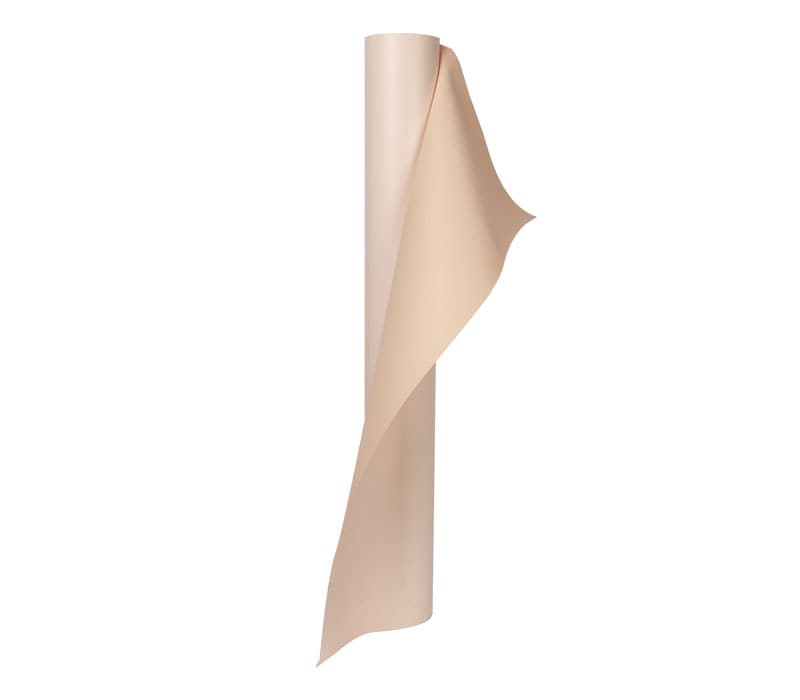
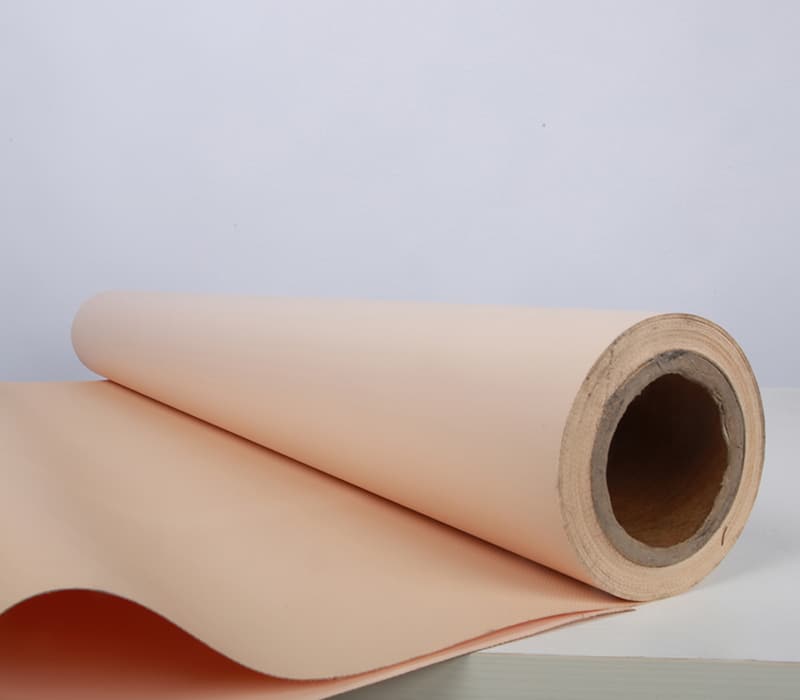
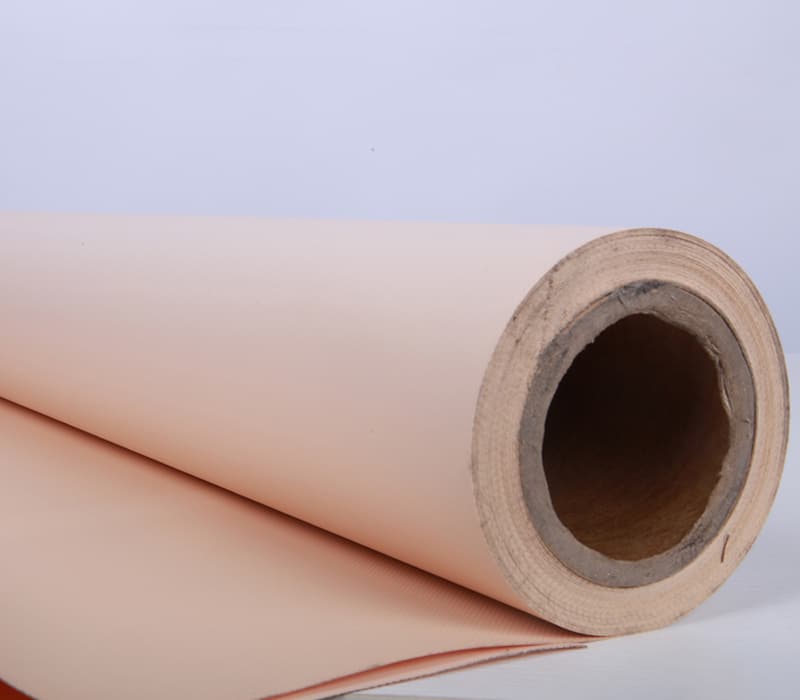
PVC Coated Composite Inflatable Fabric is a reinforced flexible material used to manufacture bounce houses, inflatable slides, obstacle courses, promotional structures, recreational equipment, event installations, and other air-supported products. Most constructions combine woven polyester fabric with flexible PVC applied to one or both surfaces.
MSD develops PVC coated composite inflatable fabrics with controlled textile construction, PVC formulation, layer adhesion, dimensions, surface quality, printing response, and fabrication compatibility. The suitable construction varies according to the inflation method. Continuous-air products and sealed chambers place different demands on the material, seams, valves, and supporting components.
The coated textile is only one part of an inflatable structure. Panel direction, internal partitions, sewn or welded seams, reinforcement zones, blowers, valves, anchoring points, product geometry, installation, inspection, and maintenance all contribute to final performance.
What Is PVC Coated Composite Inflatable Fabric?
PVC Coated Composite Inflatable Fabric is a technical textile made by integrating a reinforcing fabric with flexible polyvinyl chloride layers. The textile supplies mechanical support and dimensional control, while the PVC surface provides color, protection, printability, cleanability, water resistance, and compatibility with selected joining methods.
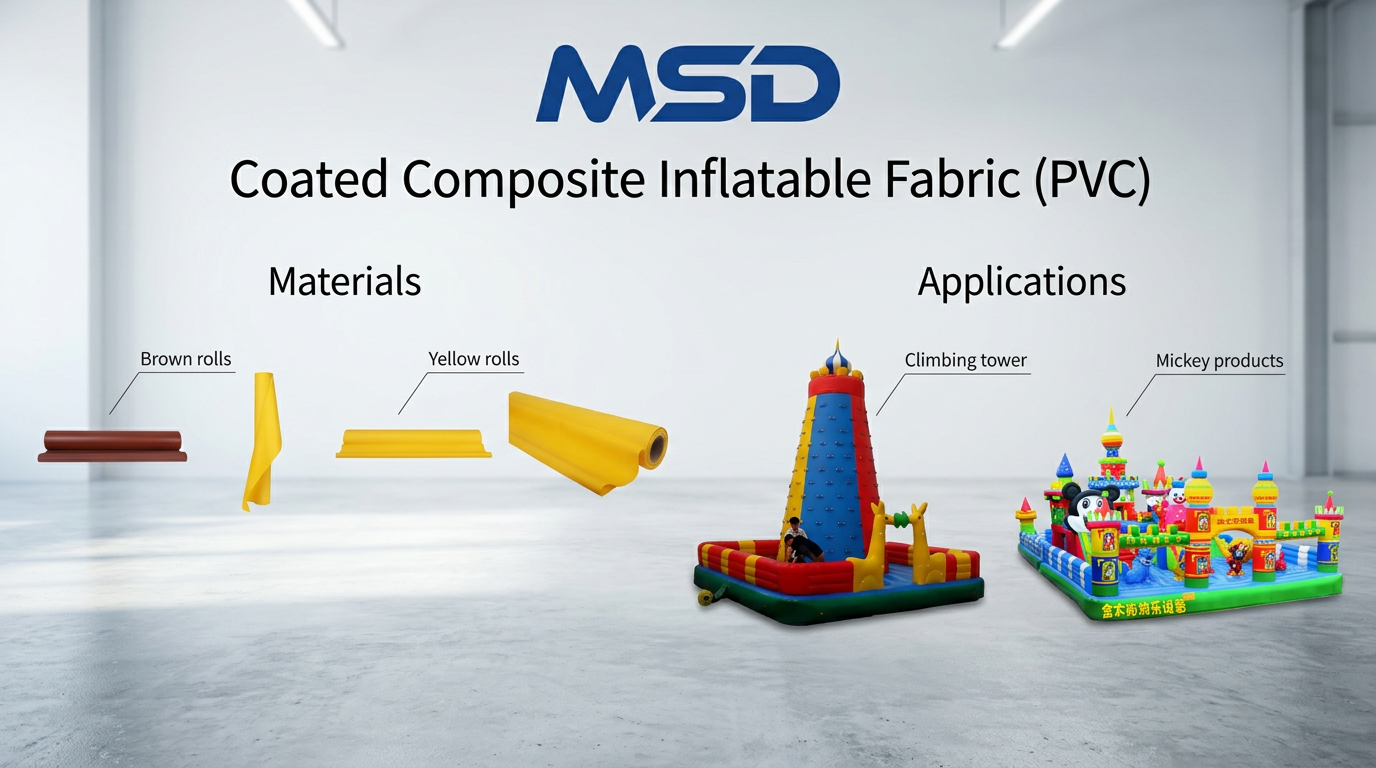
A typical construction may include:
- Woven polyester reinforcement
- Flexible PVC on one or both surfaces
- An interface connecting the PVC and textile
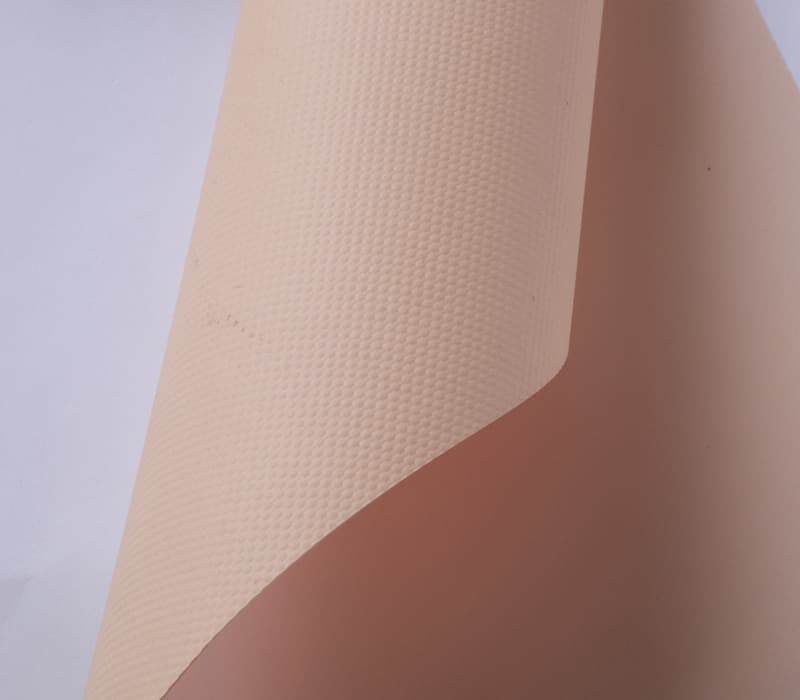
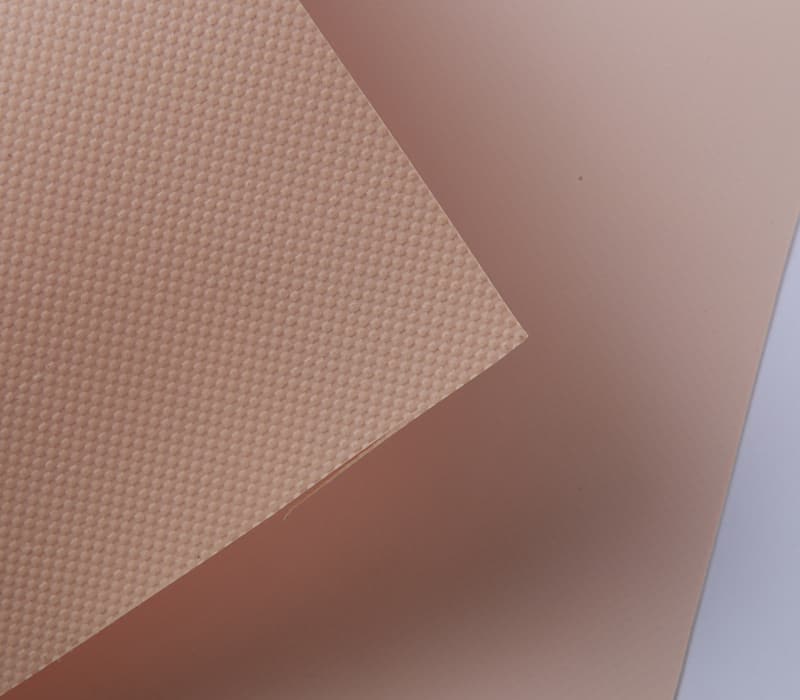
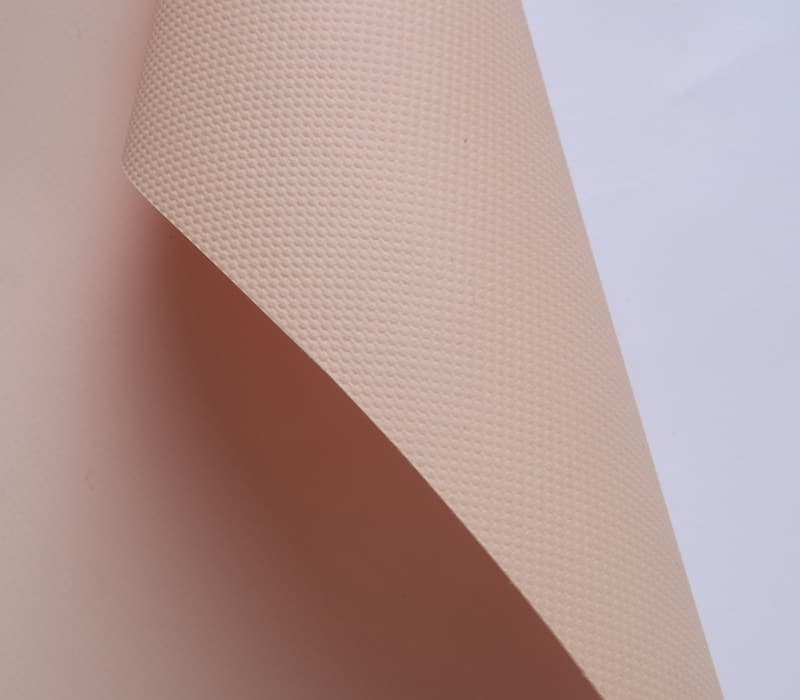
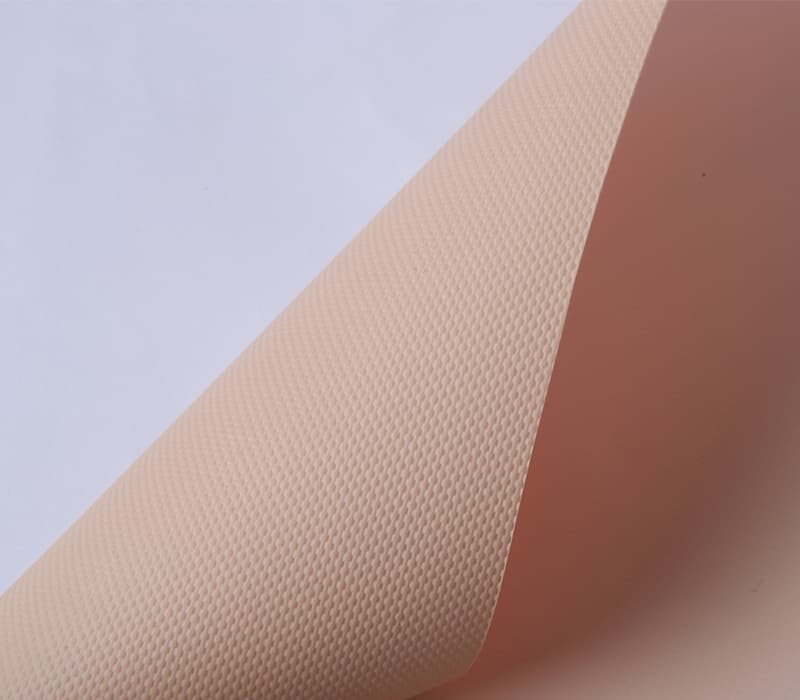
- A smooth, textured, colored, or printable finish
- An application-specific surface treatment
- Sewn, welded, or adhesively bonded joints in the finished structure
Commonly associated industry terms include:
- PVC coated inflatable fabric
- PVC-coated polyester fabric
- Inflatable structure fabric
- Inflatable entertainment fabric
- Bounce house material
- Inflatable slide fabric
- Advertising inflatable fabric
- Flexible composite fabric
- Technical textile for inflatable products
- Sewable or weldable PVC fabric
These terms may refer to similar materials, but they do not always describe the same construction. Fabric density, yarn specification, PVC thickness, area weight, production method, and seam compatibility can differ considerably among material grades.
How Is PVC Coated Composite Inflatable Fabric Structured?
PVC coated inflatable fabric works as a composite. The textile carries mechanical loads, while the PVC layers protect the reinforcement and provide a surface suitable for printing, cleaning, sewing, welding, or other fabrication processes.
| Structural Element |
Primary Function |
Evaluation Focus |
| Polyester textile |
Reinforces the composite |
Yarn specification, density, tensile response, and tear behavior |
| PVC surface |
Protects the textile and forms the exposed face |
Formulation, thickness, flexibility, and uniformity |
| Bonding interface |
Connects the textile with the PVC layers |
Peel adhesion, heat aging, and repeated-fold response |
| Surface finish |
Controls appearance and processing behavior |
Texture, gloss, printing, cleaning, and blocking |
| Fabricated seam |
Connects panels in the inflatable structure |
Sewing or welding response, seam strength, and leakage |
| Reinforcement |
Distributes force around high-stress areas |
Position, dimensions, layer arrangement, and joining method |
These elements should be considered together. High textile strength cannot compensate for poor adhesion, unsuitable seams, or inadequate reinforcement.
Polyester Base Fabric
The polyester substrate provides the reinforcing framework beneath the PVC layers. Woven polyester is commonly used for its dimensional support during coating, fabrication, inflation, operation, folding, and storage.
Key variables include:
- Yarn specification and count
- Fabric density and weave
- Warp and weft direction
- Tensile and tear response
- Dimensional stability
- Surface consistency
- Heat response
- PVC compatibility
Mechanical behavior may differ between warp and weft directions. Test data should identify the evaluated direction, while panel orientation should reflect expected loads. Base-fabric strength alone does not define completed-product performance. Seams, dimensions, reinforcement, internal partitions, anchors, airflow, and installation also matter.
Flexible PVC Surface Layers
Flexible PVC layers protect the polyester reinforcement and form the composite’s visible working surface. Depending on the construction, they may provide color, water resistance, printability, cleanability, abrasion response, texture, flexibility, and compatibility with thermal joining.
PVC may cover one or both textile sides. Double-sided structures protect both faces, while single-sided versions may suit specific applications. A thicker layer is not automatically better; textile strength, total weight, adhesion, folding, seams, and service conditions must also be considered.
Bonding Interface and Layer Adhesion
The bonding interface keeps the PVC and polyester layers connected. Adhesion depends on textile preparation, cleanliness, PVC chemistry, temperature, pressure, cooling, water exposure, and repeated flexing.
Peel adhesion should be tested using a defined method and, where relevant, after heat, humidity, water, or folding exposure. Failure location should also be recorded.
PVC Formulation
Flexible PVC may contain resin, plasticizers, pigments, stabilizers, processing aids, and surface modifiers. Formulation changes can affect flexibility, welding, temperature response, color, ink interaction, blocking, migration, and weathering.
Surface Finish
Available finishes may include smooth, matte, gloss-adjusted, textured, colored, printable, or specially treated surfaces. Finish selection affects appearance, friction, cleaning, printing, welding, and storage. Printing and welding compatibility should be verified under the intended processing conditions.
Continuous-Air Inflatable Structures
Continuous-air inflatable structures use a blower or fan throughout operation. Air supplied by the blower compensates for controlled loss through sewn seams, entrances, vents, and other designed openings.
Common applications include:
- Bounce houses
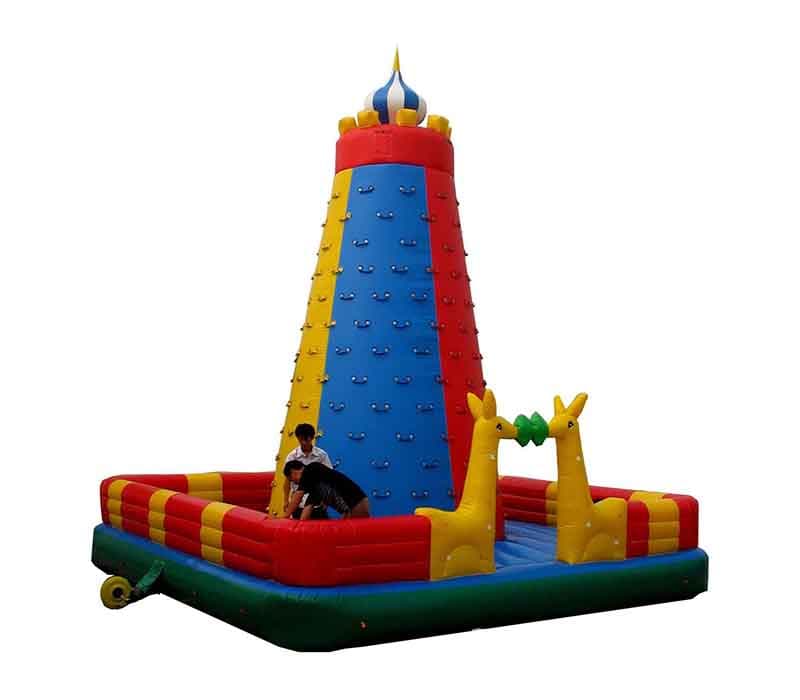
- Inflatable obstacle courses
- Selected inflatable slides
- Promotional arches
- Advertising characters
- Event decorations
- Recreational play structures
Material evaluation may cover:
- Tensile behavior
- Tear resistance
- Sewn-seam response
- Repeated flexing
- Abrasion
- Printability
- Cleanability
- Folding performance
- Area weight
- Applicable fire documentation
Airflow forms part of the structural design. Blower output, internal air distribution, partition layout, entrances, vents, and seam leakage all influence shape and stability.
Continuous airflow does not make material permeability irrelevant. It means air loss is managed through a different structural approach than in a sealed chamber.
Sealed-Air Inflatable Structures
Sealed-air structures are inflated through a valve and designed to retain pressure without continuous airflow during normal use.
These applications require closer evaluation of:
- Material air permeability
- Welded or bonded seam leakage
- Valve sealing
- Attachment sealing
- Pressure retention
- Temperature-related pressure change
- Chamber geometry
- Reinforcement
- Complete chamber integrity
A PVC coated textile should not be treated as suitable for sealed-pressure use simply because it has a polymer surface. The exact material grade, PVC coverage, joining method, valve structure, reinforcement, and representative chamber must be assessed together.
Pressure testing should identify the specimen, initial pressure, test duration, temperature, and acceptance criteria. Material data and completed-chamber performance are not interchangeable.
Continuous-Air vs. Sealed-Air Structures
The inflation system is a central factor in selecting the fabric, seam method, and testing approach.
| Feature |
Continuous-Air Structure |
Sealed-Air Structure |
| Air supply |
Blower operates during use |
Chamber is inflated through a valve |
| Common seam type |
Frequently sewn |
Generally welded, bonded, or otherwise sealed |
| Air management |
Continuous airflow compensates for controlled loss |
Closed chamber is designed to retain pressure |
| Typical applications |
Bounce houses, obstacle courses, and promotional forms |
Airtight cushions and selected sealed chambers |
| Evaluation focus |
Tear, abrasion, flexing, seams, and blower compatibility |
Permeability, leakage, valves, and pressure retention |
| Material requirement |
Coated textile suited to the intended sewn or welded construction |
Validated airtight material with a compatible sealed-joint system |
A material developed for a continuous-air structure should not automatically be used in a sealed chamber. The joining method, pressure level, valve system, and chamber geometry require separate validation.
PVC Coated Inflatable Fabric vs. Airtight Fabric vs. Drop Stitch Material
These materials may look similar in photographs, yet their internal structures and functions are different.
| Material Type |
Structural Characteristic |
Typical Function |
| PVC coated composite inflatable fabric |
Reinforced textile with flexible PVC surfaces |
Sewn or welded inflatable structures |
| Airtight inflatable fabric |
Coated or laminated textile developed for sealed chambers |
Tubes, cushions, rails, sidewalls, and enclosed air chambers |
| Drop stitch material |
Opposing textile surfaces connected by internal yarns |
Flat pressure-supported panels and platforms |
PVC coated composite inflatable fabric is a broad category. Airtight fabric places additional emphasis on limited air transmission and sealed-joint performance. Drop stitch material contains connecting yarns that control the distance between two inflated surfaces.
One product may incorporate several material types. Each component should be selected according to its structural task.
Applications and Material Selection
Inflatable products have different requirements for airflow, loading, abrasion, seams, printing, folding, and environmental exposure. Material selection should therefore begin with the complete product design, inflation system, and intended use.
Applications of PVC Coated Composite Inflatable Fabric
PVC coated composite fabric supports recreational, promotional, and event structures when its textile construction, PVC surface, and joining method match the application.
Bounce houses
Continuous-air bounce houses require materials suited to repeated flexing, user contact, abrasion, cleaning, and sewn seams. Entrances, internal partitions, anchor points, and blower connections may need additional reinforcement. Product dimensions, installation surfaces, and relevant fire documentation should also be considered.
Inflatable slides
Inflatable slides combine climbing areas, sidewalls, sliding surfaces, structural chambers, and transition zones. Evaluation should cover surface friction, abrasion, seam placement, repeated loading, cleaning, folding, and ground contact. Sliding surfaces and supporting panels may use different constructions according to their functions.
Inflatable obstacle courses
Obstacle courses contain climbing steps, tunnels, handles, internal walls, connecting sections, and entry or exit areas. Since these zones experience different loads, reinforced seams and high-stress details should be tested in representative structures rather than as flat fabric alone.
Advertising inflatables
Advertising inflatables include arches, columns, characters, product replicas, and event displays. Material selection may focus on print definition, color consistency, surface appearance, foldability, seam type, blower compatibility, anchoring, and indoor or outdoor exposure. Graphic layouts should account for seams, curves, folds, and viewing direction.
Inflatable water slides
Water-slide materials should be assessed for water exposure, slip behavior, abrasion, seams, reinforcement, cleaning, drying, storage, and ground conditions. The inflation system must be confirmed before defining material and seam requirements. Products should be thoroughly dried before folding to reduce odor, staining, and trapped moisture.
Recreational and event structures
Other applications include inflatable games, activity enclosures, sports-training structures, event arches, decorative forms, and promotional displays. Each structure should be evaluated according to its geometry, loading, inflation method, user contact, installation environment, and applicable safety requirements.
How to Select PVC Coated Composite Inflatable Fabric
Material selection should connect the fabric structure, inflation method, fabrication process, operating environment, and finished-product design.
1. Define the inflation system
Confirm whether the product uses continuous airflow, a sealed air chamber, or a hybrid system. This determines permeability, seam construction, blower or valve design, and pressure-testing requirements.
2. Define the product type
Identify the intended application, such as a bounce house, inflatable slide, obstacle course, advertising inflatable, water-play product, or training structure. Each has different mechanical, printing, cleaning, and safety needs.
3. Establish product geometry
Define overall dimensions, panel shapes, internal partitions, openings, blower or valve positions, anchors, attachments, and reinforcement zones. Geometry affects airflow, stability, load distribution, and seam layout.
4. Review mechanical loads
Consider static tension, dynamic movement, repeated user contact, concentrated loads, seam stress, anchor forces, ground contact, folding, and transportation.
5. Select the textile construction
Review tensile and tear requirements, fabric direction, dimensional stability, panel size, seam design, and reinforcement. Warp and weft differences should be reflected in panel orientation.
6. Define area weight and thickness
Area weight and thickness influence handling, folding, surface protection, sewing, welding, transportation, and finished-product weight. Heavier material is not automatically more suitable.
7. Confirm the joining method
Produce representative sewn, welded, or bonded seams using the intended equipment, settings, layer arrangement, and reinforcement. Include corners, attachments, and partition joints.
8. Evaluate the service environment
Consider indoor or outdoor use, sunlight, rain, humidity, temperature, water contact, ground conditions, cleaning frequency, installation cycles, and storage.
9. Define printing requirements
Confirm the printing method, ink system, colors, graphic coverage, curing process, abrasion exposure, and seam positions. Use realistic artwork during print trials.
10. Identify applicable testing
Testing may cover tensile strength, tear resistance, peel adhesion, abrasion, puncture, repeated flexing, weathering, fire behavior, seam response, permeability, and pressure retention.
11. Produce a representative trial
The trial should include actual panels, seams, corners, graphics, reinforcements, and attachments. Flat material testing alone may not reveal risks created by fabrication or finished geometry.
Specification Framework
The following framework can support material evaluation and technical communication.
| Specification Area |
What to Define |
Why It Matters |
| Inflation system |
Continuous-air, sealed-air, or hybrid |
Establishes air-management and seam requirements |
| Textile substrate |
Yarn and weave construction |
Influences mechanical and dimensional response |
| PVC structure |
Single-sided or double-sided |
Influences protection and fabrication |
| Width |
Usable roll width |
Affects panel layout and seam placement |
| Total thickness |
Complete composite thickness |
Influences handling, folding, and joining |
| Area weight |
Mass per unit area |
Relates to handling and finished-product weight |
| Surface finish |
Smooth, matte, textured, colored, or printable |
Influences appearance, cleaning, friction, and processing |
| Joining method |
Sewing, welding, or adhesive bonding |
Defines fabrication compatibility |
| Mechanical data |
Tensile, tear, peel, puncture, and abrasion results |
Supports comparison under stated methods |
| Environmental data |
Heat, cold, water, and weathering response |
Connects the material with service conditions |
| Fire data |
Tested construction and standard |
Supports application-specific documentation |
| Air data |
Permeability or pressure-retention method |
Distinguishes material performance from system performance |
Values should be confirmed through the technical information for the selected MSD material grade.
Why Choose MSD PVC Coated Composite Inflatable Fabric?
MSD develops PVC Coated Composite Inflatable Fabric with attention to polyester reinforcement, PVC formulation, coating or lamination control, adhesion, dimensional consistency, surface quality, printing response, and seam processing.
The category supports inflatable entertainment structures, promotional inflatables, recreational equipment, event installations, and related flexible products. MSD evaluates the composite within the complete inflatable system, including its textile, PVC layers, product geometry, seams, reinforcement, inflation method, and expected environment.
Relevant MSD capabilities include:
- Polyester textile evaluation
- PVC formulation development
- Coating and lamination process control
- Single-sided and double-sided composite development
- Width and thickness management
- Area-weight control
- Layer-adhesion evaluation
- Surface and color inspection
- Printable-surface assessment
- Sewing-response evaluation
- Welding-response assessment
- Dimensional-stability evaluation
- Roll and edge inspection
- Application-focused material development
- Technical documentation for relevant grades
Where a project defines a tensile value, tear result, fire classification, weathering result, air-permeability value, or seam requirement, the supporting data should relate to the selected construction and stated test method.
Frequently Asked Questions
What is PVC Coated Composite Inflatable Fabric?
PVC Coated Composite Inflatable Fabric is a technical textile made by combining a reinforcing fabric with flexible PVC layers. It is used in inflatable entertainment, event, promotional, and recreational structures.
What base fabric is used in PVC coated inflatable fabric?
Woven polyester is commonly used as the reinforcing textile. Yarn type, density, weave, and fabric weight depend on the material construction and intended application.
Is PVC coated inflatable fabric airtight?
Airtightness should not be assumed from the product name. Sealed applications require evaluation of the material surface, welded or bonded seams, valves, attachments, and representative chamber.
What is the difference between continuous-air and sealed-air inflatables?
Continuous-air structures use a blower while operating and frequently use sewn seams. Sealed-air structures retain pressure inside a closed chamber and require validated air-retaining materials and sealed joints.
Is PVC coated inflatable fabric the same as drop stitch material?
No. PVC coated inflatable fabric is a reinforced flexible composite. Drop stitch material has internal yarns connecting two opposite textile surfaces, allowing the inflated structure to maintain a controlled thickness.
Can PVC coated inflatable fabric be sewn?
Selected constructions can be sewn. Thread, needle, stitch density, seam design, fabric direction, and reinforcement should be matched to the finished structure.
Can PVC coated inflatable fabric be welded?
Compatible PVC constructions may support high-frequency, hot-air, hot-wedge, or another validated thermal process. Suitability depends on formulation, textile construction, thickness, equipment, and process settings.
Can the fabric be printed?
Applicable PVC surfaces may support compatible printing methods. Ink adhesion, curing, flexibility, abrasion, cleaning, weather exposure, and seam interaction should be tested.
What affects tear resistance?
Tear behavior is influenced by yarn specification, textile density, weave, PVC layers, material direction, damage geometry, conditioning, and test method.
Is tensile strength the same as tear resistance?
No. Tensile strength measures the response of a specimen to pulling force. Tear resistance measures how existing damage spreads through the composite.
Does heavier inflatable fabric provide greater service durability?
Not automatically. Area weight is only one factor. Textile construction, PVC formulation, adhesion, seams, abrasion exposure, product design, use conditions, and maintenance also influence durability.
How is seam strength evaluated?
Seam strength is assessed using representative sewn, welded, or bonded samples. Results depend on seam geometry, material direction, production settings, conditioning, and test method.
Can PVC coated inflatable fabric be used outdoors?
Selected grades may be suitable for defined outdoor applications. Sunlight, temperature, humidity, rain, installation duration, cleaning, and storage should be assessed using grade-specific information.
Does a fabric fire classification apply to the complete inflatable structure?
Not automatically. A classification applies to the tested material construction under the stated method. The finished inflatable product may require separate assessment.
How should PVC coated inflatable fabric be stored?
Store rolls in a clean, dry environment away from direct heat, sunlight, sharp objects, oil, water, and excessive stacking pressure. Preserve material identification and inspect the surface before processing.
---------------------------------------------------------------
PVC Coated Composite Inflatable Fabric combines polyester reinforcement with flexible PVC surface technology. Its suitability depends on the relationship between textile construction, PVC formulation, adhesion, seams, reinforcement, inflation method, dimensions, loading, and environmental exposure. MSD develops PVC Coated Composite Inflatable Fabric for bounce houses, inflatable slides, obstacle courses, advertising inflatables, event structures, recreational equipment, and related flexible applications.

 English